Water Leak Sensor Buying Guide: What to Look For
Water damage is one of the most expensive problems for property owners. This buying guide covers what to look for in a leak sensor and where to place them.

Marcus Reed
Smart Home Security Specialist
Marcus has spent over 8 years testing smart security devices in real rental apartments. He focuses on drill-free setups that anyone can install.
Bottom line up front
A water leak sensor is one of the cheapest insurance policies you can buy. At $25 each, a few sensors placed under sinks, near washing machines, and next to water heaters can alert you to leaks before they cause thousands of dollars in damage.
Start with the Cryptronics Water Leak Sensor, all products, or Build your kit.
Why leak sensors matter
Water damage is one of the most common and expensive problems for homeowners, renters, and Airbnb hosts. A slow leak under a sink or behind a washing machine can go unnoticed for days. By the time it is discovered, water may have damaged cabinets, flooring, drywall, and subfloors. Mold remediation adds even more cost.
In short-term rentals, guests may not notice or report a leak. Hosts often find out only after checkout — when the damage is severe.
What to look for in a water leak sensor
1. Local audible alarm
The sensor should produce a loud beep when water is detected — even if your phone is not connected or the app is closed. This ensures you are alerted even during a Wi-Fi outage.
2. Phone notifications
For remote alerts, the sensor should connect to a smart home app. The Cryptronics Water Leak Sensor sends phone notifications through the Tuya Smart app when paired with a Zigbee gateway.
3. Battery-powered
Battery-powered sensors are easier to place because they do not need a nearby outlet. Look for sensors with long battery life (6–12 months typical).
4. Compact size
A small sensor fits easily under sinks, behind washing machines, and in tight utility spaces. Bulky sensors are harder to place in the spots where leaks actually happen.
5. No monthly fee
Avoid sensors that require a subscription for basic alerts. Cryptronics sensors work without a monthly monitoring plan.
Where to place leak sensors
Under kitchen sinks
Pipe connections under kitchen sinks are common leak points. Place a sensor flat on the cabinet floor under the P-trap.
Under bathroom sinks
Bathroom sink connections can loosen over time. Place a sensor under each bathroom sink cabinet.
Near washing machines
Washing machine hoses are one of the most common sources of water damage. Place a sensor on the floor behind or next to the machine.
Near water heaters
Water heaters can develop slow leaks from the drain valve or tank. Place a sensor on the floor near the base.
Near dishwashers
Dishwasher connections can leak during or after cycles. Place a sensor on the floor near the dishwasher base.
In utility rooms
If your property has a utility room with plumbing, place a sensor near any pipe connections, valves, or appliances.
How many sensors do you need?
- One-bedroom apartment: 2–3 sensors (kitchen sink, bathroom sink, washing machine)
- House: 4–6 sensors (kitchen, bathrooms, laundry, water heater, dishwasher)
- Airbnb property: 4–5 sensors (kitchen, bathroom, laundry, water heater)
At $25 each, a full set of leak sensors costs less than a single insurance deductible.
Cryptronics Water Leak Sensor
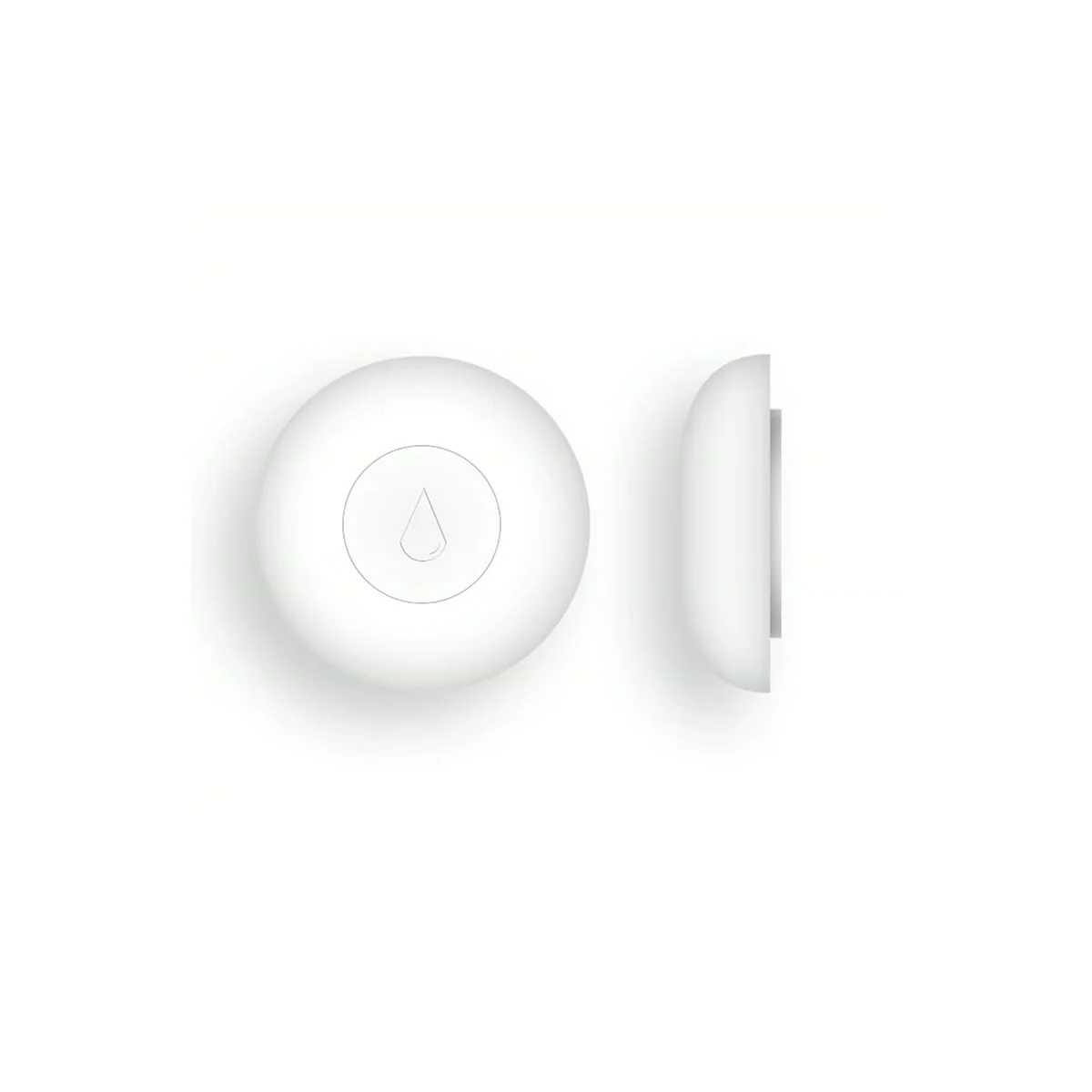
The Cryptronics Water Leak Sensor is a battery-powered device that detects water contact. When water touches the sensor, it triggers a local alarm and sends a phone notification through the Tuya Smart app.
Setup is simple: place the sensor on the floor, insert batteries, pair it with the app, and test it with a small amount of water.
For a broader property protection strategy, see our guide on protecting your rental property from water damage.
FAQ
Do leak sensors require Wi-Fi?
The Cryptronics Water Leak Sensor produces a local audible alarm even without Wi-Fi. For phone notifications, pair it with the Tuya Smart app through a Zigbee gateway.
Will the sensor detect condensation?
The sensor detects water contact, not humidity. Condensation alone typically does not trigger it unless enough water pools to reach the sensor contacts.
Can I use leak sensors in an Airbnb?
Yes. Leak sensors are especially valuable in short-term rentals because guests may not notice or report leaks. Place sensors under sinks and near appliances.
Product disclaimer
Smart security products support awareness, alerts, access control, and convenience. They do not guarantee prevention of theft, damage, leaks, unauthorized entry, or emergencies.