Smart Sensors: Detect Break-In Threats Before They Happen
Smart sensors don't just react to break-ins — they warn you before one occurs. Learn how door, window, and motion sensors create an early-warning security system.

Priya Sharma
Home Automation Writer
Priya writes practical guides for renters and first-time homeowners. She's obsessed with finding budget-friendly smart home solutions.
Smart Sensors: How to Detect Break-In Threats Before They Happen
Most people think of home security as something that kicks in after a break-in starts — an alarm blaring, a camera recording, a notification buzzing your phone. But the most effective home security systems are built around a different philosophy: early warning. Smart sensors, when placed strategically, can alert you to suspicious activity before a door is kicked in or a window is forced open. For renters, homeowners, and Airbnb hosts in Los Angeles, this kind of proactive protection is no longer a luxury — it's an accessible, affordable reality.
Here's how smart sensors work, where to place them, and how to build a layered early-warning system that fits your living situation.
How Smart Sensors Actually Work
Smart sensors are small, low-profile devices that monitor specific physical changes in their environment — an opening door, a vibrating window frame, a sudden shift in motion. When they detect something outside the normal range, they send an instant alert to your smartphone.
The key insight is timing. A would-be intruder doesn't materialize inside your home — they test entry points first. They may jiggle a door handle, press against a window, or linger on a porch. Smart sensors are designed to catch these early signals.
Common sensor types include:
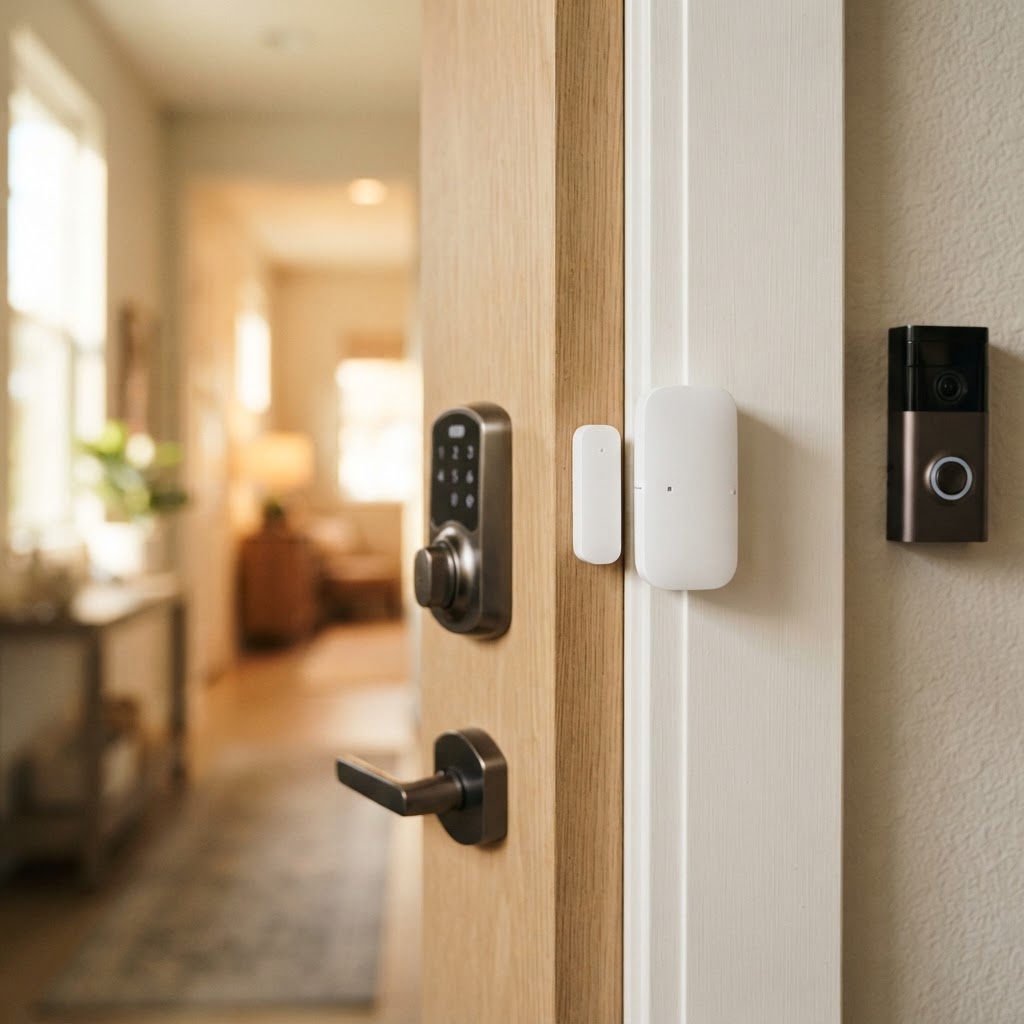
- Door/window sensors — trigger when a door or window is opened or moved
- Motion sensors — detect movement in a defined area, like a hallway or entryway
- Glass break sensors — respond to the acoustic signature of shattering glass
- Video doorbells — detect motion at your front door and let you see and speak to whoever is there in real time
Cryptronics door and window sensors, for example, use magnetic contact technology to detect the moment a door or window is separated from its frame — giving you an alert within seconds, day or night.
The Layered Security Approach: Don't Rely on One Device
No single sensor covers every scenario. A smart lock secures your front door, but what about the sliding glass door in the back? A video doorbell monitors your porch, but what about the side gate? Effective early-warning security is built in layers.
Think of it in three zones:
Zone 1 — Perimeter Monitoring (Outside Your Home)
- A video doorbell at your front entrance detects motion before anyone even touches the door. You can see visitors, delivery drivers, or anyone loitering — and respond via two-way audio without opening the door.
- Outdoor cameras positioned over driveways, backyards, or parking areas extend your visibility to areas sensors can't reach.
Zone 2 — Entry Point Protection (Doors and Windows)
- Door and window sensors on every accessible entry point create a complete perimeter alarm. In Los Angeles, where many apartments and rental homes have multiple sliding doors and large windows, this coverage matters.
- A smart lock on your front door adds an active layer — you control who has access and get notified every time the door is locked or unlocked. No key duplication, no lockbox vulnerabilities.
Zone 3 — Interior Detection (Inside Your Home)
- Motion sensors inside main living areas act as a last line of defense. If something bypasses your entry points, interior motion detection ensures you're still alerted immediately.
- Smoke detectors and water leak sensors round out the picture — protecting against non-intrusion emergencies that can be just as devastating.
Building out all three zones doesn't require a professional installation or a home renovation. Cryptronics products are designed for no-drill, renter-friendly installation — meaning adhesive mounts and magnetic contacts that won't violate your lease or leave marks on your walls.
Why Early Warning Matters More Than Alarm Response
Let's be direct about something: by the time a traditional alarm sounds, an intruder has already entered your home. The average residential break-in takes under 90 seconds. A loud siren may deter further intrusion, but the damage — or worse — may already be done.
Early-warning sensors change that math. When your video doorbell flags suspicious loitering at 11 PM, you have time to:
- Call a neighbor or building manager
- Contact LAPD non-emergency line
- Turn on interior lights remotely
- Trigger a deterrent response before entry is attempted
This is especially valuable for Airbnb hosts managing properties remotely. You can't always be on-site, but a layered sensor system means you're never truly "away" from your property. Door and window sensors combined with a smart lock and outdoor cameras give you real-time awareness of everything happening at your listing — and the ability to respond immediately if something looks wrong.
What to Look for When Choosing Smart Sensors
Not all sensors are created equal. Here's what actually matters when you're evaluating options for a Los Angeles rental, condo, or short-term rental property:
- No subscription fees — Many security platforms charge $10–$30/month just to access your own alerts. Look for devices that deliver notifications directly to your phone with no ongoing cost. Cryptronics products include no monthly fees — ever.
- Easy installation — Drilling into walls or door frames isn't an option for most renters. Adhesive and magnetic mounting systems make setup a 10-minute task, not a weekend project.
- Reliable connectivity — Wi-Fi and Bluetooth-based sensors should have stable, low-latency connections. Dropped alerts are worse than no alerts.
- Warranty and return policy — Smart home devices should be backed by a manufacturer that stands behind their quality. Cryptronics includes a 2-year warranty and 30-day returns on all products, so you can buy with confidence.
- Scalability — Start with one or two sensors and expand as needed. A good sensor ecosystem lets you add devices without replacing your whole setup.
Building Your Early-Warning System: A Practical Starting Point
If you're starting from zero, here's a simple, effective setup for a one-bedroom apartment or small rental home:
- Video doorbell on the front entrance — your first line of visibility
- Door sensor on the front door and any secondary entry points
- Window sensors on ground-floor or easily accessible windows
- Smart lock on the front door for access control and lock/unlock notifications
- Motion sensor in the main living area or hallway
This five-device setup covers all three security zones and can be installed in an afternoon without tools, without drilling, and without a monthly bill.
For Airbnb hosts, add an outdoor camera covering your entrance or parking area and a smart power strip to manage connected devices remotely. For larger homes, expand window and door sensor coverage to every accessible opening.
Conclusion
The best home security moment is the one where nothing bad happens — because your system warned you in time. Smart sensors shift your security posture from reactive to proactive, giving you the early-warning signals that make a real difference in preventing break-ins rather than just documenting them.
For renters and Airbnb hosts in Los Angeles, the good news is that this level of protection is fully accessible: no drilling, no subscriptions, no complicated installation. Just practical, reliable devices that keep you informed and in control — before anything goes wrong.
Explore Cryptronics door and window sensors, video doorbells, smart locks, and motion sensors to start building your layered early-warning system today.