Smart Sensors: Detect Break-In Risks Before They Happen
Smart sensors don't just react to break-ins — they alert you before one happens. Learn how door, window, and motion sensors protect your home proactively.

David Chen
Tech Reviewer & Airbnb Host
David reviews smart home tech and manages short-term rentals. He knows exactly what hosts need to keep guests safe without intrusive setups.
Smart Sensors: How to Detect Break-In Risks Before They Happen
Most people think of home security as reactive — a loud alarm that goes off after a window shatters or a door swings open. But modern smart sensors have fundamentally changed that equation. Today's devices can detect suspicious activity, unusual patterns, and environmental triggers before a break-in escalates into something worse. Whether you're renting an apartment in Silver Lake, hosting guests through Airbnb in Venice, or owning a home in the San Fernando Valley, proactive detection is the smartest layer of defense you can add.
Here's how smart sensors work, what they monitor, and why getting ahead of a threat is always better than cleaning up after one.
How Smart Sensors Work: More Than Just Alarms
Traditional alarm systems wait for a breach to trigger a response. Smart sensors operate on a different principle: continuous, real-time awareness. They communicate with your smartphone through a home Wi-Fi network or dedicated hub, sending instant push notifications the moment something unusual is detected.
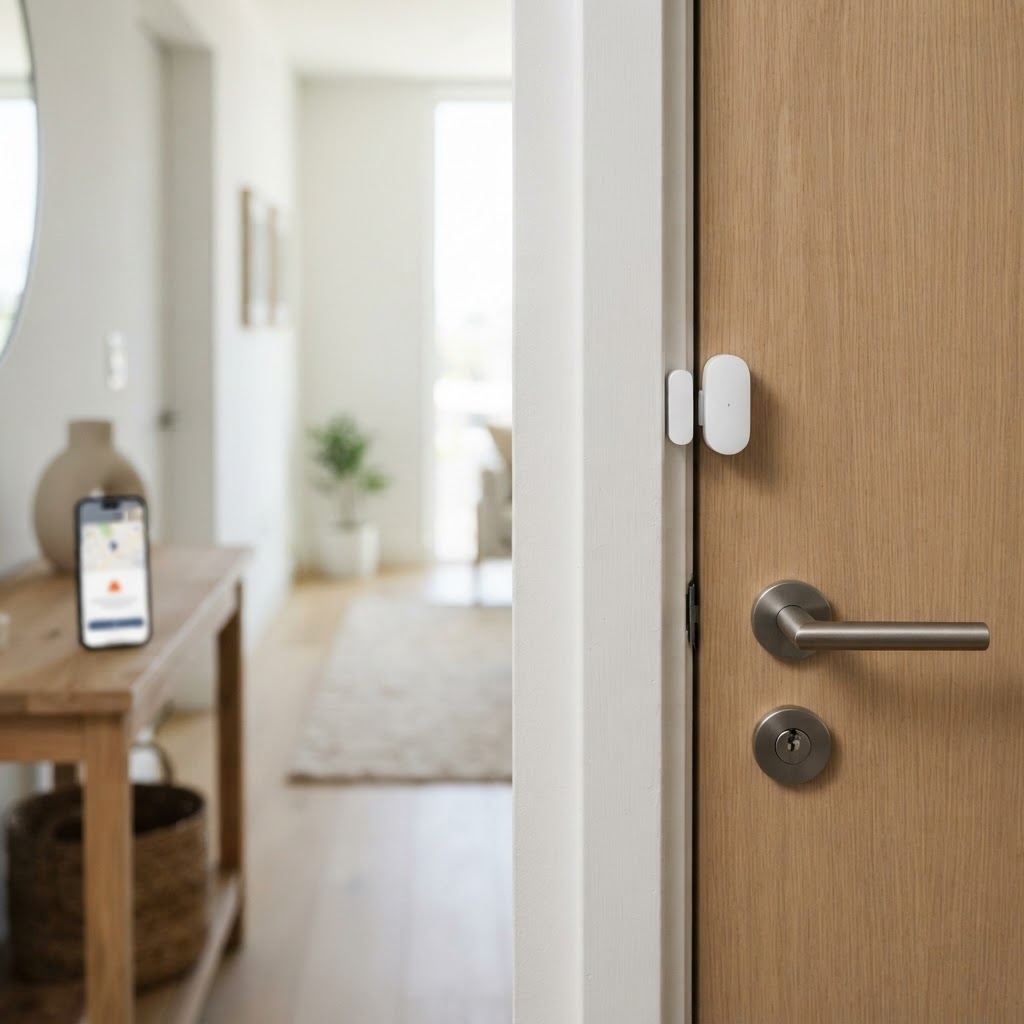
The key difference is context. A smart door/window sensor, for example, doesn't just scream when a door opens — it tells you which door opened, when, and for how long. That granular data lets you make informed decisions fast. Did your front door open at 2 a.m. when you're home asleep? That's worth knowing immediately.
Cryptronics door and window sensors install in seconds with adhesive backing — no drilling, no landlord permission required — and carry a 2-year warranty with no monthly subscription fees. You get lifetime alerts without a recurring bill.
The Three Stages of a Break-In (And Where Sensors Help)
Understanding how most residential break-ins unfold helps you see exactly where sensors intervene:
Stage 1 — Reconnaissance Burglar activity often starts with probing: testing doors, peering through windows, ringing doorbells to see if anyone's home. A Cryptronics video doorbell captures this on camera and sends a live notification to your phone the moment motion is detected at your entrance. You can see who's there — and they can see that you're watching.
Stage 2 — Entry Attempt This is where door and window sensors shine. Any attempt to open, force, or tamper with an entry point triggers an immediate alert. Pair sensors with a Cryptronics smart lock, and you also get a log of every lock and unlock event — so you can spot an unauthorized entry attempt the moment it happens.
- Real-time push alerts to your smartphone
- Tamper detection on sensor hardware
- Optional loud local alarm to deter intruders on the spot
- Entry logs with timestamps for every door event
Stage 3 — Escalation If an intruder does get inside, motion sensors and indoor cameras provide a second layer of detection. Cryptronics indoor cameras offer wide-angle coverage and night vision, streaming footage directly to your phone. No cloud subscription required — local storage keeps your footage private.
Why Renters Need Sensors More Than Anyone
If you're renting, you likely can't install traditional hardwired security systems. Landlords won't allow drilling into walls or door frames, and many monitored security services require professional installation that voids lease agreements.
This is exactly why Cryptronics products were designed with renters in mind:
- No-drill, adhesive installation on all sensors and cameras
- No subscription — pay once, own it forever
- 30-day return policy — risk-free if it doesn't fit your space
- Portable — when you move, your security system moves with you
For renters in dense Los Angeles neighborhoods — apartments in Koreatown, condos in Culver City, bungalows in Echo Park — the ability to deploy professional-grade sensors without touching a single wall is a genuine game-changer.
Smart Sensors for Airbnb Hosts: Protect Your Property Between Stays
Airbnb hosts face a unique challenge: your property is occupied by strangers on a rotating basis, and you're often not on-site to monitor things. Smart sensors offer visibility and accountability without being intrusive to guests.
Here's how hosts use sensors strategically:
- Door/window sensors on storage rooms or private areas alert you if a guest accesses spaces that are off-limits
- Video doorbells let you monitor arrivals and departures without being present
- Smoke detectors and CO sensors protect your property and guests from hazards — and protect you from liability
- Water leak sensors under sinks and near appliances catch plumbing issues before they become expensive damage claims
- Smart power strips help manage energy use and protect electronics between stays
All Cryptronics devices are guest-friendly in appearance and operation, and none require guests to interact with them. Alerts go directly to the host's phone — quietly and efficiently.
Building a Layered Sensor Strategy for Your Home
The most effective security setups use sensors in combination, creating overlapping layers of awareness. Here's a practical framework for any home size:
Front Entry Layer
- Video doorbell (motion detection + two-way audio)
- Smart lock (keyless entry + access logs)
- Door sensor (open/close + tamper alerts)
Interior Layer
- Motion sensors in hallways or living areas
- Indoor camera for wide-angle room coverage
Environmental Layer
- Smoke and CO detectors in bedrooms and kitchen
- Water leak sensors under sinks, near water heaters, behind toilets
You don't need to deploy everything at once. Start with your highest-risk entry points — typically the front door and ground-floor windows — and expand from there. Cryptronics products are designed to work as a standalone unit or as part of a larger ecosystem, giving you flexibility as your needs grow.
Conclusion: Don't Wait for the Alarm to Go Off
The most powerful thing a smart sensor does isn't sound an alarm — it's buy you time. Time to call for help, time to verify what's happening, time to act before a situation becomes a crisis. For renters, homeowners, and Airbnb hosts across Los Angeles, that early warning capability is worth more than any reactive system.
With no monthly fees, no-drill installation, a 2-year warranty, and a 30-day return window, Cryptronics makes it straightforward to build real, proactive protection — without the complexity or cost of traditional security systems.
The question isn't whether you need smart sensors. It's how soon you want to know when something's wrong.