Smart Sensors: Detect Break-In Risks Before They Happen
Smart sensors don't just react to break-ins — they warn you before one occurs. Learn how the right devices can keep your home safer around the clock.

Elena Torres
Security Systems Consultant
Elena advises property owners on practical security upgrades. She specializes in no-contract, self-monitored systems for apartments and homes.
Smart Sensors: How to Detect Break-In Risks Before They Happen
Most people think of home security as reactive — a siren goes off, a camera records footage, and you deal with the aftermath. But the most effective security strategy is proactive. Modern smart sensors are designed to alert you to suspicious activity before a break-in unfolds, giving you precious time to act. Whether you rent an apartment in Silver Lake, own a home in Pasadena, or host guests through Airbnb in Venice Beach, understanding how these devices work can make a real difference in your peace of mind.
Here's a practical breakdown of how smart sensors function as an early warning system — and how to build a layered security setup that keeps you one step ahead.
How Smart Sensors Actually Work
At their core, smart sensors detect changes in the physical environment and instantly send alerts to your smartphone. Unlike traditional alarms that only trigger during a break-in, smart sensors can flag the conditions that often precede one.
There are several types of sensors relevant to home security:
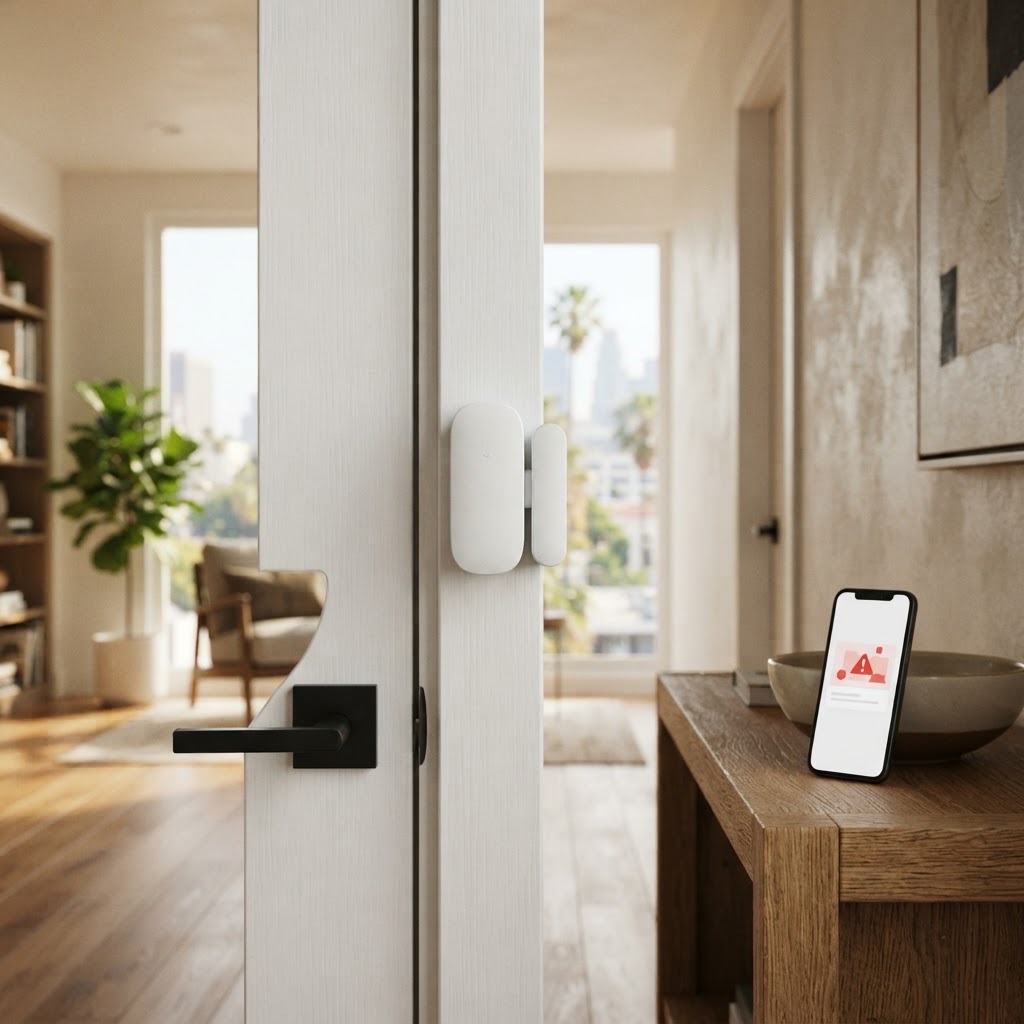
- Door and window sensors detect when an entry point is opened or tampered with — even if you're asleep or away.
- Motion sensors pick up movement in hallways, living rooms, or near valuables, alerting you to activity in areas that should be empty.
- Vibration sensors can detect the physical force of someone attempting to pry open a door or window before it actually opens.
- Video doorbells combine a camera with motion detection, flagging anyone who approaches your front door — not just those who knock.
Together, these devices create overlapping layers of awareness that no single device can provide on its own.
The Most Vulnerable Entry Points in Your Home
Data consistently shows that most break-ins happen through the front door, followed by first-floor windows and back doors. Knowing this helps you prioritize where to deploy sensors first.
Front Door Your front door is the most common entry point. A Cryptronics video doorbell lets you see and speak to anyone approaching — even before they reach the door. Pair it with a Cryptronics smart lock, and you can verify who's there and control access remotely. If someone lingers suspiciously or attempts to tamper with the lock, you'll get an immediate alert.
Windows and Sliding Doors Windows — especially on ground floors — are often overlooked. Cryptronics door and window sensors attach without drilling or permanent adhesive damage, making them ideal for renters. The moment a window is opened unexpectedly, you receive a push notification. No monthly monitoring fee required.
Back and Side Doors These are attractive to intruders precisely because they're out of sight. Motion sensors placed near rear entry points provide coverage in areas where a camera might not have a clear line of sight.
Building a Layered Early-Warning System
The most secure homes don't rely on one device — they use multiple sensors that work together. Think of it as concentric rings of protection:
Ring 1 — Perimeter Awareness This is your first line of defense. A Cryptronics video doorbell and outdoor cameras monitor the approach to your home. Motion detection alerts you the moment someone enters your property or loiters near an entry point.
Ring 2 — Entry Point Detection Door and window sensors cover every potential access point. If a door or window opens when it shouldn't, you know immediately — even if you're at work across the city.
Ring 3 — Interior Motion Monitoring If someone does get inside, interior motion sensors trigger an alert before they can do significant damage or locate valuables. This layer is especially useful for Airbnb hosts who need to know if guests access restricted areas of a property.
Ring 4 — Environmental Hazards Break-ins aren't the only threat. Cryptronics smoke detectors and water leak sensors round out a complete protection system by alerting you to fire or flooding — hazards that can be just as devastating. A Cryptronics smart power strip can also cut power to appliances remotely, reducing fire risk when a property is unoccupied.
Why Cryptronics? Every sensor in our lineup requires zero drilling, ships with simple peel-and-stick or tension-mount installation, and carries a 2-year warranty. There are no monthly fees — ever. You own the system outright.
Tips for Renters and Airbnb Hosts in Los Angeles
LA renters face a specific challenge: most landlords won't allow modifications to walls or door frames. That rules out many traditional security systems. Here's how to build a robust setup without risking your deposit:
- Choose no-drill devices exclusively. Cryptronics sensors and cameras are designed from the ground up for renter-friendly installation.
- Place door sensors on every exterior door, including sliding glass doors common in LA apartments and condos.
- Use a video doorbell even in apartment buildings — many models work with existing doorbell wiring or run on rechargeable batteries.
- For Airbnb hosts, place motion sensors in utility rooms, garages, or anywhere guests shouldn't access. You'll get an alert if boundaries are crossed, without needing to review hours of footage.
- Take advantage of the 30-day return window to test devices in your specific space before committing.
Los Angeles has seen rising property crime in several neighborhoods. Proactive sensor coverage isn't paranoia — it's practical preparation.
What to Do When You Get an Alert
Receiving an alert is only useful if you know how to respond. Here's a simple protocol:
- Check your camera feed first. Is the motion a person, a pet, or something benign like wind?
- If suspicious, don't go investigate alone. Call a neighbor, building manager, or LAPD non-emergency line.
- Use two-way audio on your video doorbell to speak to whoever is at the door — sometimes the presence of a voice is enough to deter someone.
- Lock down remotely. If your smart lock shows an unexpected unlock event, re-lock it immediately from your phone.
- Save footage or alert logs before they cycle out of storage, in case you need to file a report.
Conclusion
Waiting for an alarm to go off after a break-in is the old way of thinking about security. Smart sensors shift that dynamic entirely — they give you awareness, warning, and control before a situation escalates. A well-placed set of door sensors, a video doorbell, and motion detectors can turn your home into a proactive security system without a single hole in the wall or a recurring subscription fee.
For renters, homeowners, and Airbnb hosts across Los Angeles, that kind of practical, affordable protection isn't just smart — it's essential.