Renter-Friendly Security: What You Can and Can't Do
Renting doesn't mean sacrificing your safety. Learn what security upgrades are lease-friendly, which require landlord approval, and how to protect your space without losing your deposit.

Priya Sharma
Home Automation Writer
Priya writes practical guides for renters and first-time homeowners. She's obsessed with finding budget-friendly smart home solutions.
Renter-Friendly Security: What You Can and Can't Do in a Lease
Moving into a rental in Los Angeles comes with its own set of trade-offs. You get flexibility, but you give up some control over your space. One of the most common frustrations renters face? Wanting to feel safe at home without violating lease terms or risking their security deposit.
The good news: you have more options than you think. The key is knowing which upgrades are truly renter-friendly, which ones require a conversation with your landlord, and which should be avoided entirely. This guide breaks it all down so you can make smart, confident choices.
What Most Leases Actually Prohibit
Before adding any security hardware, it's worth understanding what typical lease agreements restrict. Most standard leases in California prohibit:
- Drilling holes into walls, doors, or door frames without written permission
- Replacing existing locks without landlord approval (and often requiring a copy of any new key)
- Permanent modifications to the property structure
- Painting or patching without authorization
The intent behind these rules isn't to leave you vulnerable — it's to protect the property's integrity and ensure the landlord can re-rent it without expensive repairs. Understanding this helps you frame your security decisions correctly: the goal is zero trace, not zero security.
The Green Zone: No-Permission-Needed Security Upgrades
A wide range of smart security products require absolutely no drilling, no permanent adhesives that damage surfaces, and no modifications to your unit. These are your safest bets for immediate protection.
Wireless Door and Window Sensors
Door and window sensors from Cryptronics attach with removable 3M-style adhesive strips and alert you instantly if an entry point is opened or tampered with. They're small, discreet, and peel off cleanly when you move out.
Why this works for renters:
- No tools required
- Battery-powered, no wiring needed
- Take them with you when you leave
Indoor Smart Cameras
Placing a camera inside your unit — pointed at entry points like the front door or living room — is entirely within your rights as a tenant. Cryptronics indoor cameras sit on shelves or countertops and require no mounting hardware at all.
Smart Power Strips
A smart power strip lets you monitor connected devices, set schedules, and even cut power remotely. It's an underrated security layer that protects your electronics from surges and lets you simulate occupancy when you're away.
Smoke and Water Leak Sensors
California law requires landlords to provide working smoke detectors, but adding a smart smoke detector or a water leak sensor under your sink gives you an extra layer of protection — and real-time alerts to your phone. These are plug-in or adhesive-mounted and leave zero damage.
Cryptronics Advantage: Every product ships with no-drill installation options, carries a 2-year warranty, and is backed by a 30-day return policy. No subscriptions. No monthly fees. Ever.
The Yellow Zone: Ask Your Landlord First
Some upgrades are reasonable requests that many landlords will approve — especially if you frame them as improvements that benefit the property.
Smart Locks
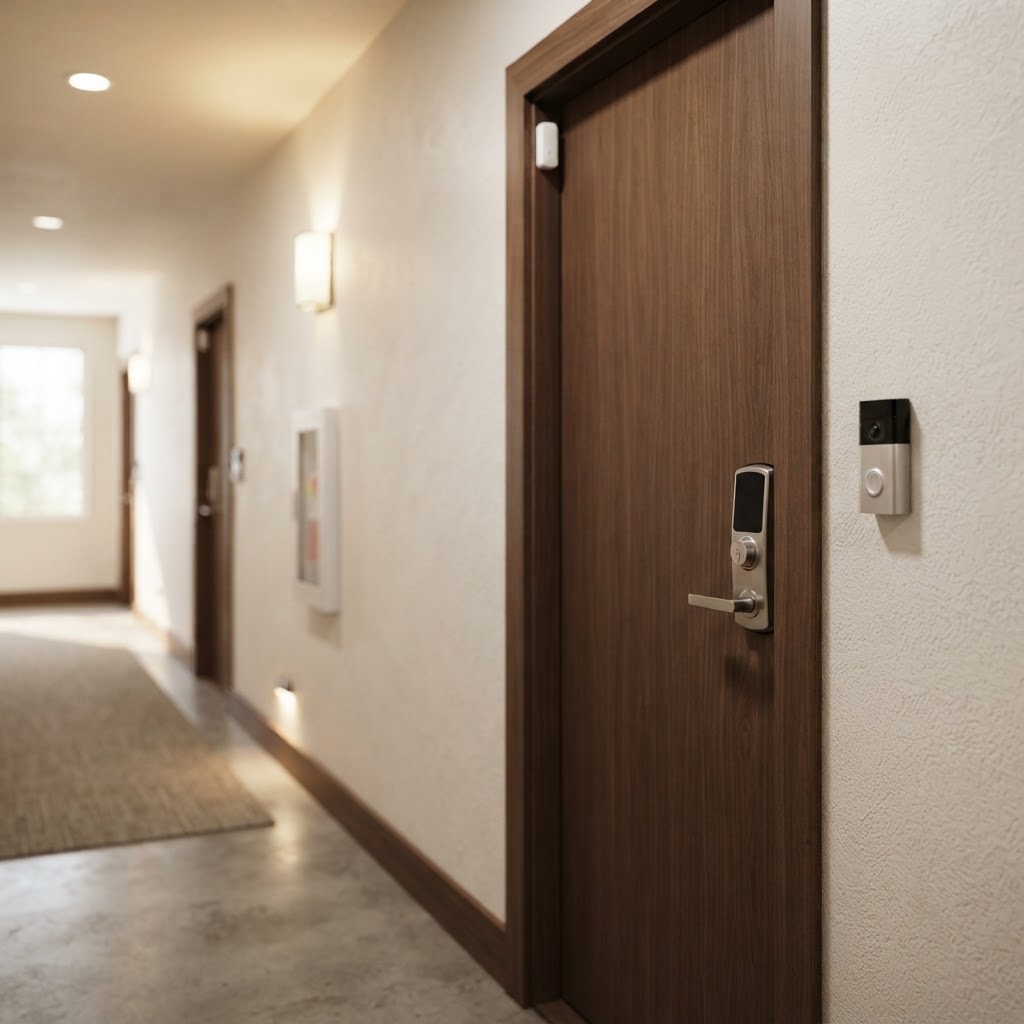
Replacing a deadbolt with a smart lock is one of the most impactful security upgrades you can make. However, most leases require landlord approval before swapping out any lock hardware.
Here's how to handle it:
- Put the request in writing via email or a formal letter
- Explain the benefit — smart locks can increase property security and provide audit trails
- Offer to provide a spare key or access code to your landlord
- Agree to restore the original lock upon move-out
Cryptronics smart locks are designed for easy installation and even easier removal. Many landlords say yes when they realize the process is fully reversible.
Video Doorbells
A video doorbell typically requires mounting near your existing doorbell wiring or attaching to the door frame. Some units work on battery power and attach with minimal hardware. Check your lease, then check with your landlord — the conversation is often simpler than you'd expect.
If approved, a Cryptronics video doorbell gives you live video, two-way audio, and motion alerts directly to your phone, with no cloud subscription required.
The Red Zone: What to Avoid Without Written Permission
Even with the best intentions, some DIY security installs can cost you your deposit or create legal tension with your landlord:
- Drilling into door frames to install reinforced strike plates
- Running cables through walls for wired camera systems
- Installing external cameras that face shared spaces or neighboring units (this also raises privacy concerns under California law)
- Replacing window locks or adding window bars without approval
If any of these feel necessary for your safety, document the conversation with your landlord and get approval in writing. In some cases — especially if you've reported security concerns — landlords have a legal obligation to address them.
Tips for Airbnb Hosts in Rental Units
If you're subletting or hosting on Airbnb, your security responsibilities are layered. You need to protect your guests and stay compliant with your lease and local regulations.
- Disclose any security cameras to guests — California law requires it, and Airbnb's platform policies do too. Cameras must be in common areas only, never bedrooms or bathrooms.
- Smart locks are ideal for Airbnb hosting — you can issue temporary codes and revoke access instantly without being physically present.
- Water leak sensors are especially smart for hosts who aren't on-site full-time. A burst pipe discovered hours later becomes a much bigger problem.
- Door and window sensors can alert you if guests access areas they shouldn't.
Cryptronics products are purpose-built for this use case: easy to install, easy to manage remotely, and easy to reset between guests.
Conclusion: Security Doesn't Require Compromise
Being a renter in Los Angeles doesn't mean accepting vulnerability. With the right approach — and the right products — you can build a meaningful security setup that respects your lease, protects your deposit, and genuinely keeps you safer.
Start with the no-permission-needed upgrades: door and window sensors, indoor cameras, smoke detectors, and water leak sensors. Then have an honest conversation with your landlord about smart locks and video doorbells. You may be surprised how receptive they are.
And when you move? Everything comes with you.
Ready to get started? Cryptronics offers a curated line of renter-friendly smart security products with no monthly fees, no drilling required, a 2-year warranty, and a 30-day return policy. Security that works for your life — not against it.