Renter-Friendly Security: What You Can & Can't Do
Renting doesn't mean sacrificing your safety. Learn what security upgrades are lease-friendly, which require landlord approval, and how to protect your home without losing your deposit.

Marcus Reed
Smart Home Security Specialist
Marcus has spent over 8 years testing smart security devices in real rental apartments. He focuses on drill-free setups that anyone can install.
Renter-Friendly Security: What You Can and Can't Do in a Lease
Renting an apartment or house in Los Angeles comes with a lot of perks — flexibility, no property taxes, and the freedom to move when life demands it. But one thing renters often assume they have to sacrifice is home security. The truth? You have far more options than you think. The key is knowing what your lease actually allows, what requires a conversation with your landlord, and which modern security solutions are built specifically for people who can't (or don't want to) put holes in the walls.
This guide breaks it all down so you can protect your space, your belongings, and your peace of mind — without risking your security deposit.
What Most Leases Actually Prohibit
Before you install anything, it's worth understanding the typical restrictions renters face. Most standard leases in California prohibit:
- Permanent alterations to walls, doors, or ceilings without written landlord consent
- Drilling into doorframes or structural elements that could cause damage
- Replacing existing hardware (like deadbolts or door handles) without permission
- Running exposed wiring through walls or ceilings
That said, leases are contracts — and many landlords are more flexible than you'd expect, especially if you frame the conversation around improving the property's security. Always get any verbal approvals in writing.
The good news: a growing category of smart home security products is designed from the ground up to work around these restrictions. No drills. No permanent changes. No headaches.
What You Can Almost Always Do Without Asking
Many security upgrades are entirely renter-safe and require zero landlord approval because they leave no trace. These are your first line of defense:
Plug-In and Adhesive Cameras
Indoor security cameras that sit on a shelf or mount with removable adhesive strips are 100% lease-friendly. Cryptronics indoor cameras, for example, can be positioned on bookshelves, windowsills, or mounted with 3M-style strips that peel off cleanly. No holes, no damage, no drama.
Door and Window Sensors
These small magnetic sensors stick to door and window frames using removable adhesive and alert you the moment an entry point is opened. Cryptronics door and window sensors are among the easiest security additions any renter can make — install in minutes, remove just as fast.
Smart Power Strips
A Cryptronics smart power strip won't just protect your electronics from surges — it lets you automate and monitor devices throughout your home without any wiring. Completely portable and plug-in, it's an upgrade that travels with you when you move.
Smoke and Water Leak Detectors
California law actually requires landlords to provide working smoke detectors, but adding your own layer of protection is always smart. Cryptronics smoke detectors and water leak sensors sit on countertops or floors, require no installation, and could save you thousands in water damage or fire risk — with no monthly monitoring fees.
What Usually Requires Landlord Approval
Some security upgrades are worth asking about because many landlords will say yes — especially if the improvement adds value to their property.
Smart Locks
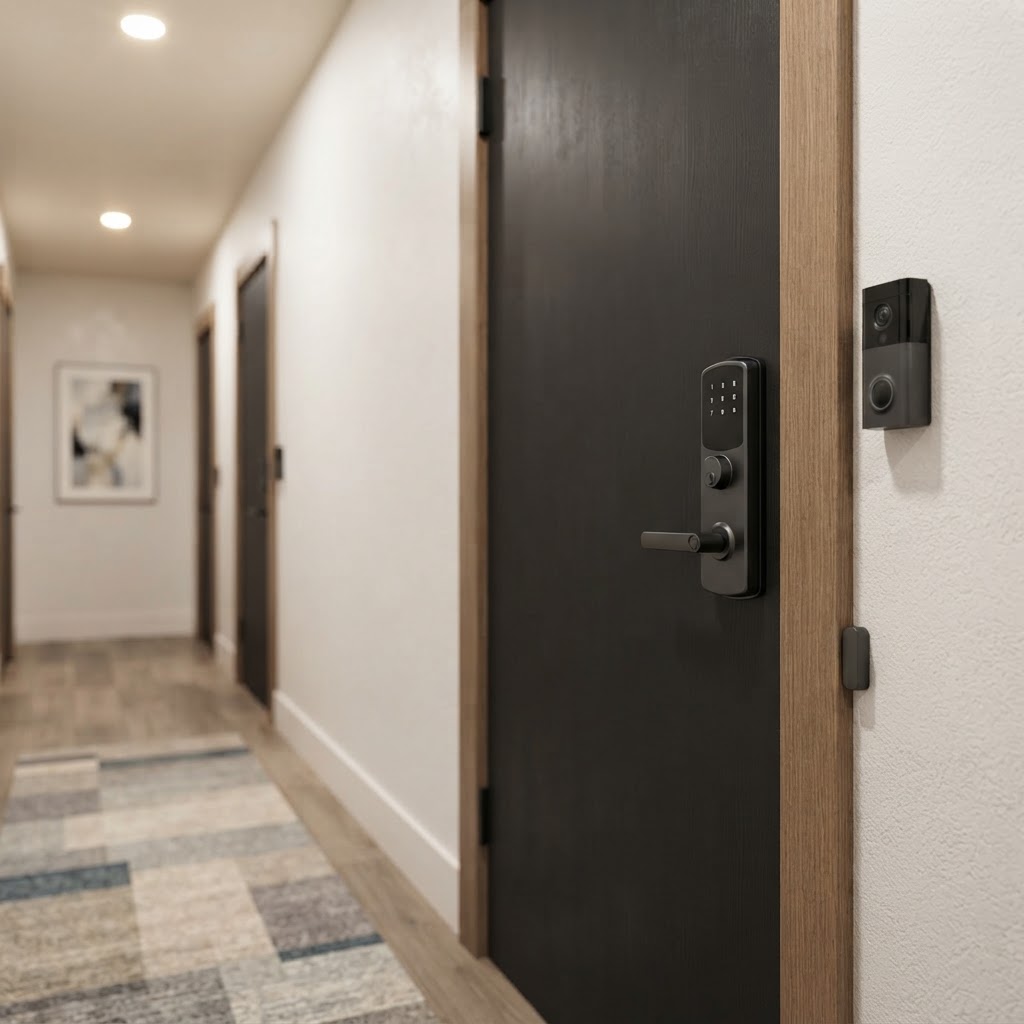
Replacing or adding a smart lock typically requires landlord consent since it involves modifying existing door hardware. However, this is one of the easiest approvals to get. A Cryptronics smart lock gives you keyless entry, access logs, and the ability to create temporary codes for guests — something most landlords actually appreciate for its security benefits. Always offer to restore the original lock when you move out.
Why Cryptronics smart locks work for renters:
- No subscription or cloud fees — ever
- Simple installation that can be reversed in under 10 minutes
- 2-year warranty and 30-day returns so you're never stuck with a product that doesn't work for you
- Share temporary access codes without handing over physical keys
Video Doorbells
A wired video doorbell requires electrical access and landlord sign-off. But many renters find that landlords agree readily — it adds security to the entire property. Cryptronics video doorbells offer crisp HD video, two-way audio, and motion alerts, all without a monthly subscription fee. If your landlord isn't on board, a battery-powered model with adhesive mounting is a solid no-permission alternative.
Exterior Cameras
Mounting a camera on an exterior wall or soffit will almost always require permission. Again, many landlords approve this because it benefits the whole building. If you go this route, document the installation with photos before and after.
Tips for the Landlord Conversation
If you need to ask permission, here's how to frame it effectively:
- Lead with benefits to them: "This smart lock keeps the property more secure and gives you a record of entry."
- Show the product specs: Demonstrate that the installation is minimal and reversible.
- Offer a written agreement: A simple email confirming approval protects both parties.
- Mention the warranty: Cryptronics' 2-year warranty means if anything goes wrong with the hardware, it's covered — reducing any risk to the landlord's property.
Most landlords in Los Angeles want responsible tenants who take their security seriously. Approaching the conversation professionally usually goes further than you'd expect.
Building a Complete Renter Security Setup
You don't need to own your home to have serious security coverage. Here's what a practical, lease-friendly setup looks like:
- Front door: Cryptronics video doorbell (battery-powered) + smart lock (with landlord approval)
- Interior: 1-2 indoor cameras on shelves or adhesive mounts
- All entry points: Door and window sensors on every accessible opening
- Kitchen/laundry: Water leak sensor under the sink or near the washing machine
- Throughout: Smoke detectors in key rooms
- Living room/office: Smart power strip for surge protection and automation
This setup costs a fraction of traditional home security systems, requires zero monthly subscription fees, and most of it can be packed into a single box when you move.
Conclusion
Being a renter in Los Angeles doesn't mean accepting vulnerability. With the right products and a clear understanding of your lease, you can build a genuinely effective security system that protects your home today and moves with you tomorrow. Cryptronics products are designed specifically for this reality — no subscriptions, no drills required for most installations, a 2-year warranty, and a 30-day return window so you can try before you fully commit.
Security isn't a privilege reserved for homeowners. It's something every renter deserves — and with the right approach, it's completely within reach.