Stop Water Damage Before It Starts with Smart Leak Sensors
Water damage is one of the costliest disasters renters and landlords face. Learn how smart leak sensors can protect your rental unit before a drip becomes a flood.

Marcus Reed
Smart Home Security Specialist
Marcus has spent over 8 years testing smart security devices in real rental apartments. He focuses on drill-free setups that anyone can install.
Stop Water Damage Before It Starts with Smart Leak Sensors
Water damage is quietly one of the most expensive and disruptive problems a renter, homeowner, or Airbnb host can face. A slow leak under the kitchen sink, a washing machine hose that finally gives out, or a water heater that decides to fail on a holiday weekend — these scenarios can rack up thousands of dollars in damage and displacement before anyone even notices something is wrong.
The good news? Smart leak sensors have made early detection genuinely accessible. For a fraction of what a single water damage claim costs, you can place a few small devices in the right spots and get instant alerts the moment moisture appears. Here's what you need to know.
Why Water Damage Is a Bigger Risk Than Most Renters Realize
Most renters assume water damage is the landlord's problem. And while your landlord is typically responsible for structural repairs, your personal belongings — furniture, electronics, clothing, irreplaceable items — are almost always your responsibility. Standard renter's insurance may cover some losses, but claims come with deductibles, premium increases, and the headache of documentation.
For Airbnb hosts, the stakes are even higher. A slow leak discovered mid-stay by a guest creates a negative review, a potential refund request, and repair costs all at once. Even a single incident can damage the trust you've built on your listing.
The most common water damage sources in rental units include:
- Under-sink plumbing (kitchen and bathroom)
- Washing machine hoses and connections
- Dishwasher supply lines
- Water heaters (especially older units)
- Refrigerator ice maker lines
- HVAC condensate drain pans
- Toilets and tank connections
Most of these are out of sight and out of mind — right until they aren't.
How Smart Leak Sensors Work
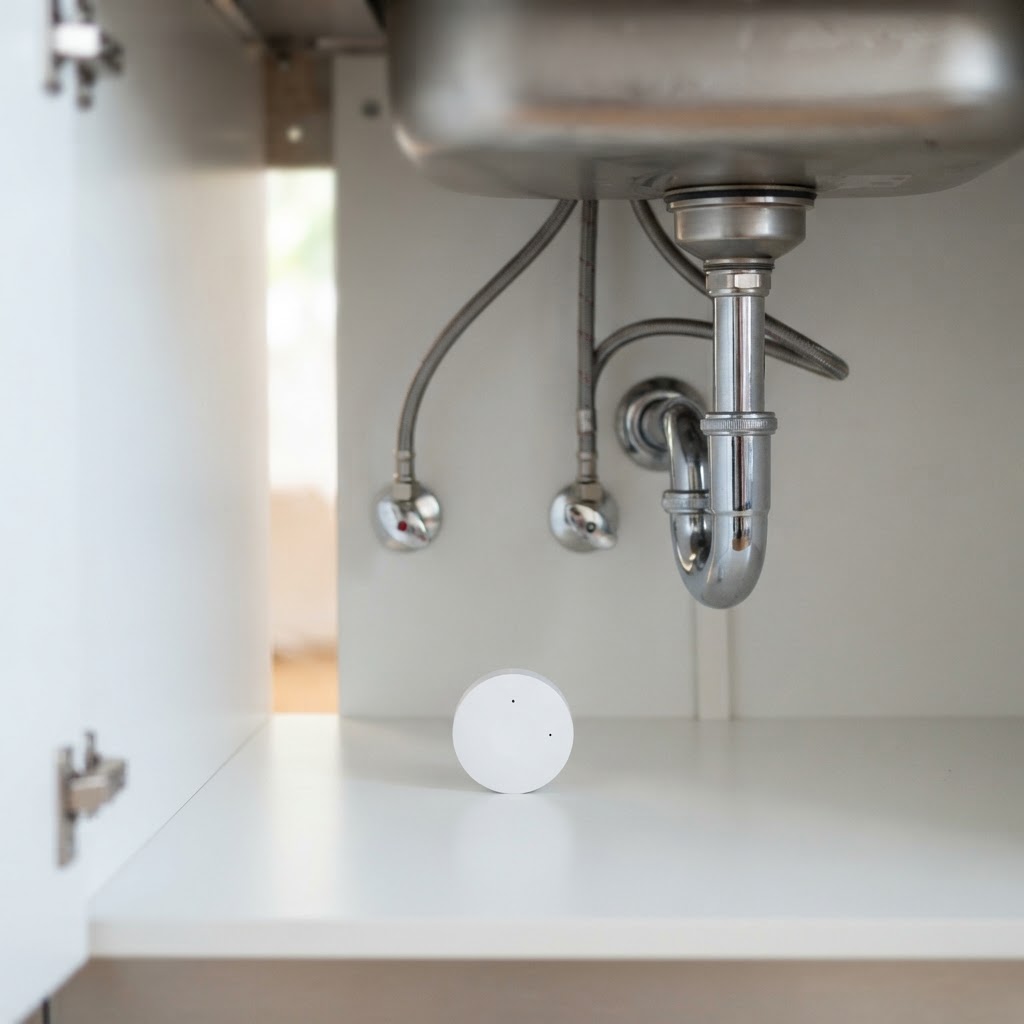
Smart water leak sensors are compact devices that sit flat on the floor or any surface near a potential water source. When the sensor's contact points detect moisture, it immediately triggers an alert — typically a loud local alarm and a push notification to your smartphone.
No plumbing knowledge required. No complex installation. You simply place the sensor, connect it to your home's Wi-Fi (or the included hub, depending on the model), and you're protected.
Cryptronics water leak sensors are designed specifically with renters in mind:
- No-drill, no-damage placement — set them on any flat surface without tools
- Instant smartphone alerts via the Cryptronics app, so you're notified even when you're away
- Loud local alarm to alert anyone in the unit
- No monthly subscription fees — your protection doesn't expire because of a billing cycle
- 2-year warranty included on every device
- 30-day returns if it isn't right for your space
For renters especially, the no-drill design is a game-changer. There's nothing to patch when you move out, and you can take your sensors with you to your next place.
Where to Place Leak Sensors in a Rental Unit
Placement is everything with leak detection. The goal is to position sensors where water would pool first if a leak occurred — not necessarily right at the source, but downstream enough to catch runoff early.
Here's a room-by-room breakdown:
Kitchen
- Under the sink — place one flat on the cabinet floor near the drain pipe and supply lines
- Next to the dishwasher — particularly near the water supply connection at the back
- Behind or beside the refrigerator if you have an ice maker or water dispenser
Bathroom
- Under the sink vanity
- Behind the toilet near the supply valve
- Near the base of the bathtub or shower if your unit has older tile or grout
Laundry Area
- Behind the washing machine — this is one of the highest-risk spots in any rental unit; hose failures can release water rapidly
Utility Closet or Garage
- Near the water heater — place a sensor directly on the floor around the base
- Near the HVAC air handler if there's a condensate drain pan
For a typical one-bedroom or two-bedroom rental, four to six sensors will cover your highest-risk areas comprehensively.
Pairing Leak Sensors with a Broader Smart Home Security Setup
Water damage protection works best as part of a layered approach to home security. Cryptronics leak sensors integrate seamlessly with other devices to give you a complete picture of your home's safety.
Consider pairing your sensors with:
- Door and window sensors — to monitor entry points and get alerts if a window is left open during rain
- Smart smoke detectors — water damage and fire risk often increase together in utility areas; dual coverage matters
- Indoor cameras — place one in a laundry room or utility closet to visually verify an alert remotely before calling your landlord or emergency services
- Video doorbells — for Airbnb hosts, knowing when guests arrive and depart helps you respond quickly if an issue is reported
- Smart power strips — if water reaches electronics or appliances, cutting power remotely is a critical safety measure
All Cryptronics devices are designed to work together without requiring a professional installer or a paid monitoring service. You own the system outright.
A Practical Note for Airbnb Hosts
If you're hosting short-term guests, you likely can't be on-site to catch problems early. A guest might notice a drip under the bathroom sink and not mention it until checkout — or not mention it at all. By then, cabinet damage, mold risk, and flooring issues can compound quickly.
Placing Cryptronics leak sensors throughout your property means you receive real-time alerts regardless of whether a guest notices or reports anything. Combined with a smart lock that lets you manage access remotely and an indoor camera in common areas (always disclosed to guests per platform guidelines), you have meaningful oversight without being intrusive.
The no-subscription model is particularly valuable here — your protection doesn't get interrupted between guest stays or during slow seasons when you might pause other services.
Conclusion
Water damage doesn't announce itself. It starts small, hides in dark cabinet corners, and grows into a serious problem before most people realize anything is wrong. Smart leak sensors are one of the simplest, most cost-effective investments you can make in a rental unit — and with no drilling, no monthly fees, and a straightforward setup, there's very little standing between you and real peace of mind.
Whether you're a renter protecting your belongings, a homeowner safeguarding your investment, or an Airbnb host keeping your property guest-ready, Cryptronics leak sensors are built for your situation — and backed by a 2-year warranty and 30-day returns so you can buy with confidence.