Stop Water Damage Before It Starts with Smart Leak Sensors
Water damage is one of the costliest surprises in any rental unit. Learn how smart leak sensors can protect your space, your deposit, and your peace of mind.

Priya Sharma
Home Automation Writer
Priya writes practical guides for renters and first-time homeowners. She's obsessed with finding budget-friendly smart home solutions.
Stop Water Damage Before It Starts with Smart Leak Sensors
Water damage is quietly one of the most expensive and disruptive problems a renter, homeowner, or Airbnb host can face. A slow drip under the kitchen sink, a washing machine hose that finally gives out, or an overflowing toilet can go unnoticed for hours — or days — causing thousands of dollars in damage to floors, walls, and personal belongings. The worst part? Much of it is entirely preventable.
Smart water leak sensors are small, affordable devices that sit in vulnerable spots around your home and alert you the moment moisture is detected. No plumber on speed dial required. No monthly monitoring fees. Just real-time protection that works quietly in the background. Here's everything you need to know about using them effectively in a rental unit or investment property.
Why Water Damage Is a Bigger Risk Than Most Renters Realize
According to insurance industry data, water damage and freezing account for nearly 24% of all homeowner insurance claims — and renters are just as exposed. In Los Angeles, older apartment buildings, aging plumbing, and even the occasional heavy rain season all contribute to elevated risk.
For renters specifically, the financial stakes are high:
- Security deposit loss — Landlords can and do deduct water damage repair costs from deposits.
- Damaged belongings — Furniture, electronics, and clothing aren't covered by your landlord's insurance.
- Liability concerns — If a leak in your unit damages a neighbor's unit below, you could be held responsible.
- Displacement — Significant water damage can make a unit temporarily uninhabitable.
For Airbnb hosts, an undetected leak between guest stays can turn into a mold problem fast — and mold remediation is expensive, time-consuming, and a serious threat to your listing's reputation.
Where to Place Smart Leak Sensors in Your Home
Placement is everything with leak sensors. The goal is to position them close enough to the source of a potential leak that they catch moisture before it spreads. Here are the highest-risk areas in any rental unit or property:
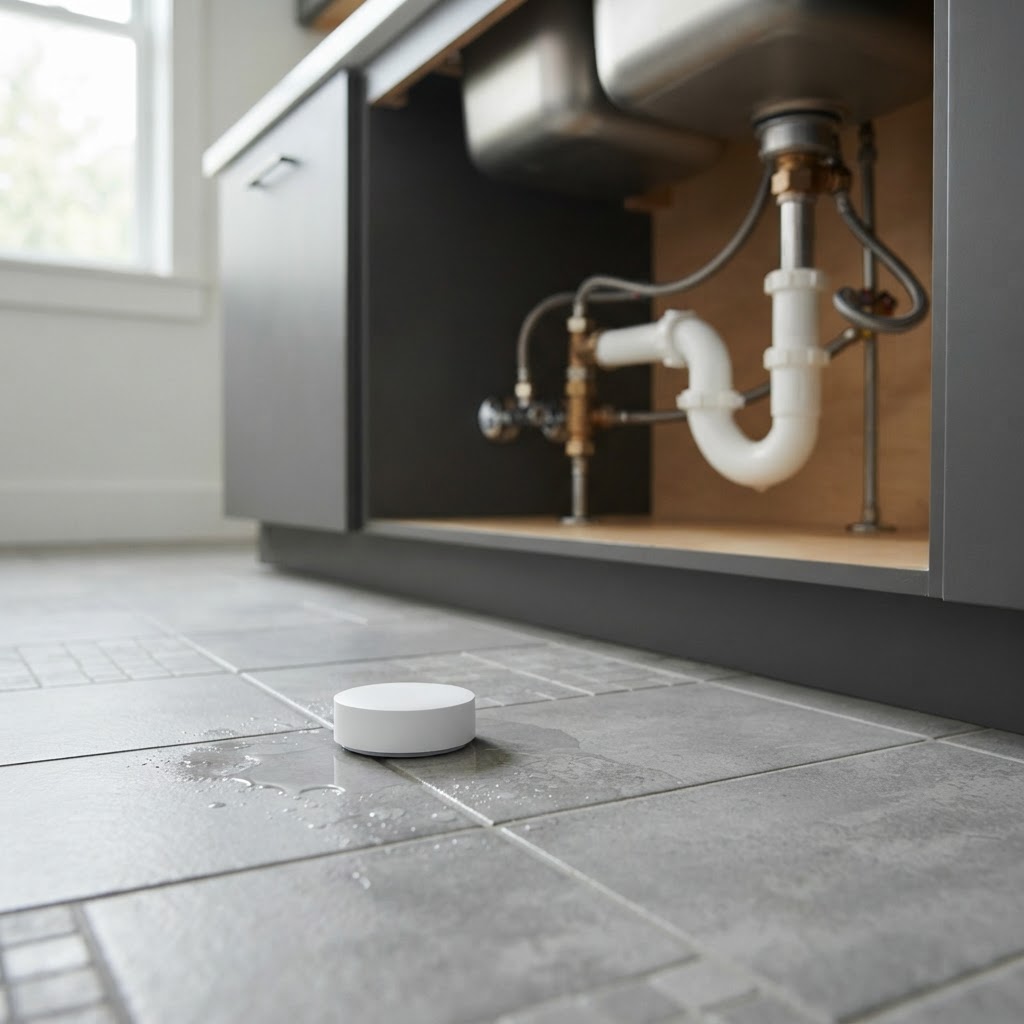
- Under the kitchen sink — Drain connections and supply lines loosen over time, especially in older buildings.
- Behind or beside the refrigerator — Many refrigerators have water lines for ice makers that can crack or disconnect.
- Under the bathroom sink and around the toilet base — Wax seals fail. Supply lines crack. These areas need monitoring.
- Near the washing machine — Hose failures are one of the leading causes of sudden, catastrophic water damage.
- Under the water heater — Tank corrosion is slow but steady, and when it goes, it goes fast.
- Near HVAC drain pans — In humid months, condensate lines can back up and overflow silently.
Cryptronics water leak sensors are designed for exactly these tight, low-profile spaces. They sit flat on the floor or surface, require no drilling, and connect to your home's Wi-Fi network to send instant alerts to your phone the moment water is detected. No hub required, no subscription, no hassle.
What to Look for in a Smart Leak Sensor
Not all leak sensors are created equal. When evaluating options, here's what actually matters:
- Real-time smartphone alerts — You want to know the instant water is detected, not after a 10-minute delay.
- Loud local alarm — An audible alert on the device itself is critical if you're home and your phone isn't nearby.
- Long battery life — Sensors placed in hard-to-reach areas shouldn't need frequent battery swaps.
- No monthly fees — Some platforms charge ongoing subscription costs just to receive alerts. Look for sensors that work without a subscription.
- Simple, no-drill setup — Especially important for renters who can't modify their units.
- Reliable connectivity — Wi-Fi direct sensors are generally more dependable than those requiring a separate hub.
Why Cryptronics:
- ✅ No monthly subscription fees — ever
- ✅ No-drill, renter-friendly installation
- ✅ Instant push notifications to your smartphone
- ✅ 2-year warranty for long-term peace of mind
- ✅ 30-day hassle-free returns if it's not the right fit
Building a Layered Smart Home Defense
Water leak sensors work best as part of a broader smart home security setup. Think of it as layered protection — each device covers a different type of risk.
For renters and homeowners, combining leak sensors with door and window sensors means you're covered for both intrusion and environmental hazards. Adding a smoke detector to the mix ensures you're protected from fire as well as water — two of the most common causes of serious rental unit damage.
Airbnb hosts in particular benefit from building out a fuller system. A video doorbell lets you monitor guest arrivals and departures remotely. Smart locks eliminate the need for physical key handoffs and let you manage access codes for each guest stay. Indoor security cameras (placed in common areas only, never private spaces) help document the condition of your property between bookings. And smart power strips can cut power to appliances remotely if something seems off.
All Cryptronics products are designed to work together without requiring a complicated smart home hub or ongoing service fees. You build the system you need, piece by piece, and everything just works.
What to Do When Your Sensor Alerts You
Getting an alert is only useful if you know how to respond. Here's a simple action plan:
- Identify the source immediately. Head to the sensor location and look for the obvious culprits — a dripping pipe, pooling water, or a failing appliance connection.
- Shut off the water supply. Every renter should know where their unit's water shutoff valve is located. In most apartments, it's under the sink or near the water heater.
- Document everything. Take photos and video before you clean anything up. This protects you with your landlord and any renter's insurance claim.
- Notify your landlord promptly. In California, landlords are responsible for plumbing repairs. Prompt written notification protects your legal standing.
- Dry the area thoroughly. Use towels, fans, and a dehumidifier if available. Mold can begin forming within 24–48 hours in damp conditions.
The Bottom Line
Water damage doesn't announce itself — it hides under sinks, behind appliances, and inside walls until it becomes a very expensive problem. Smart leak sensors are one of the most cost-effective investments any renter, homeowner, or Airbnb host can make, offering real-time protection for a one-time cost with no ongoing fees.
Cryptronics leak sensors are built specifically for people who want reliable protection without the complexity, the drilling, or the monthly bills. Set one up in under five minutes, and you'll have one less thing to worry about — whether you're home, at work, or managing a property across town.
Explore Cryptronics water leak sensors and the full smart home security lineup at cryptronics.com.