Stop Water Damage Before It Starts: Smart Leak Sensors for Renters
Water damage is one of the costliest surprises in any rental unit. Learn how smart leak sensors can protect your home, belongings, and security deposit.

Elena Torres
Security Systems Consultant
Elena advises property owners on practical security upgrades. She specializes in no-contract, self-monitored systems for apartments and homes.
Stop Water Damage Before It Starts: Smart Leak Sensors for Renters
Water damage is one of the most common — and most expensive — problems renters and landlords face. A slow drip under the kitchen sink, a washing machine hose that finally gives out, or a water heater that quietly leaks for weeks can result in thousands of dollars in property damage, ruined belongings, and serious disputes over security deposits. The worst part? Most of it is completely preventable.
Smart water leak sensors have made early detection easier than ever. These small, unobtrusive devices sit in the spots most vulnerable to moisture and alert you the moment they detect water — before a drip becomes a flood. If you're a renter, homeowner, or Airbnb host in the Los Angeles area, here's everything you need to know about protecting your space with this underrated piece of smart home technology.
Why Water Damage Is a Bigger Risk Than You Think
Most renters think about theft, break-ins, or fire when it comes to home protection. Water damage rarely gets the same attention — until it happens.
Consider these realities:
- Water damage accounts for nearly 30% of all homeowner insurance claims, and similar patterns affect renters.
- In LA's older housing stock — think pre-1980s apartments in Silver Lake, Echo Park, or West Adams — aging pipes are a constant risk.
- A single slow leak under a sink can go unnoticed for weeks, quietly rotting subfloors and encouraging mold growth.
- As a renter, you could be held responsible for damage caused by negligence — including failing to report a leak you reasonably should have known about.
The good news: catching a leak in its first minutes, rather than its first weeks, can mean the difference between a towel and a contractor.
How Smart Leak Sensors Work
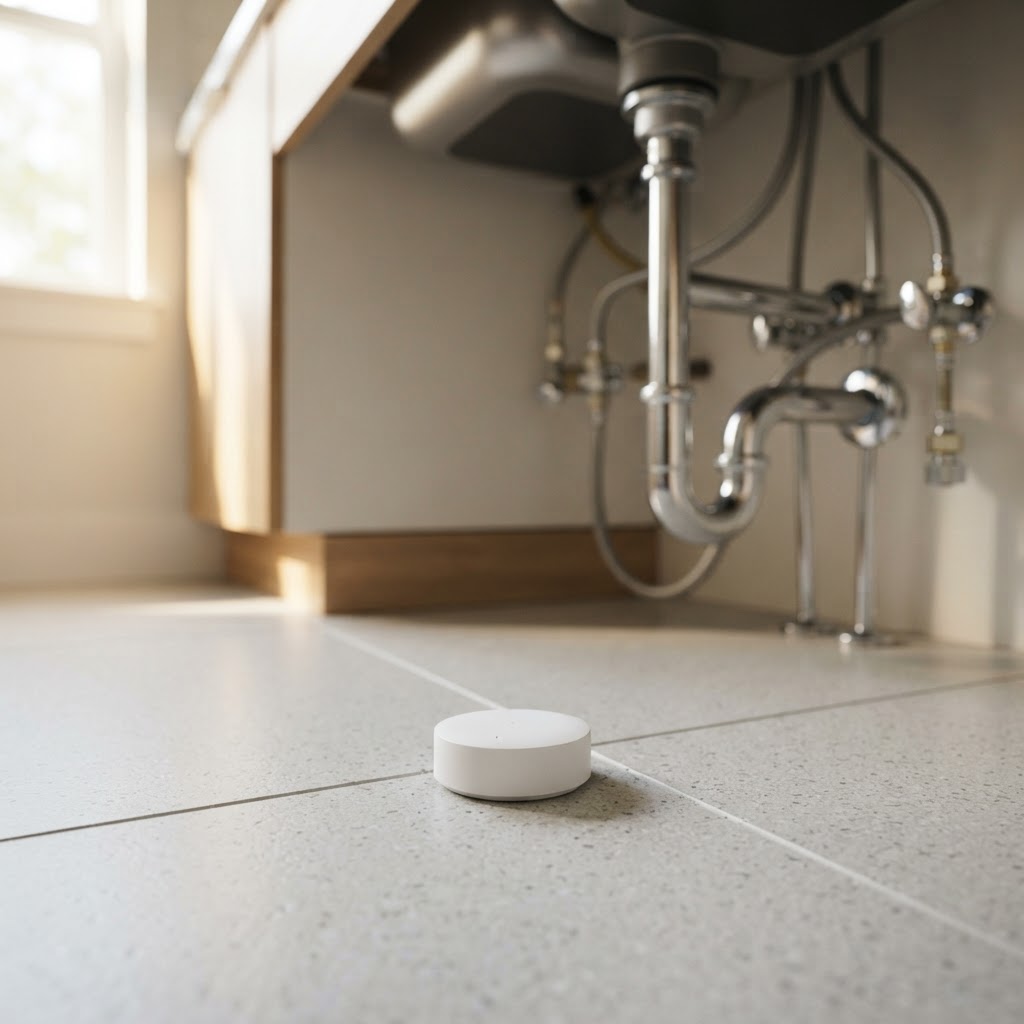
Smart water leak sensors are compact devices — often no larger than a hockey puck — that you simply place on the floor or surface near a potential water source. When the sensor detects moisture, it immediately sends an alert to your smartphone, giving you the chance to act fast.
Here's what makes them so practical for renters specifically:
- No installation required. There's no drilling, no wiring, and no need to ask your landlord's permission. You simply place them where you need them.
- Battery-powered. Most sensors run for a year or more on standard batteries, so there's no outlet to worry about.
- Instant smartphone alerts. Whether you're at work, on vacation, or just in another room, you'll know the moment moisture is detected.
- Affordable and low-maintenance. Compared to the cost of water damage repairs, leak sensors are one of the highest-value investments in your home.
Cryptronics water leak sensors are designed with renters in mind — no subscription fees, no monthly monitoring costs, and a 2-year warranty that gives you real long-term confidence.
The Best Places to Put Leak Sensors in a Rental Unit
Strategic placement is everything. You don't need a sensor in every corner — just in the spots where water problems are most likely to start.
Under the Kitchen Sink
This is the number one spot for hidden leaks. Drain connections loosen over time, and supply lines can develop slow drips that go unnoticed behind cleaning supplies and cabinet doors.
Behind and Under the Washing Machine
Washing machine supply hoses are one of the leading causes of severe water damage in residential units. A burst hose can release gallons per minute. A sensor here is non-negotiable if your unit has in-unit laundry.
Near the Water Heater
Water heaters fail gradually. Sediment buildup, corrosion, and pressure issues can cause slow seeping long before a visible failure. Placing a sensor at the base of your unit gives you a critical early warning.
Under the Bathroom Sink and Near the Toilet
Supply line failures and slow base leaks around toilets are more common than most renters realize — and bathroom water damage can spread quickly to adjacent flooring and walls.
Near HVAC Units or AC Drip Pans
In Los Angeles, central AC and mini-split systems are common. Condensate drain lines can clog and overflow, and the drip pan beneath a unit is a prime location for undetected moisture buildup.
Pairing Leak Sensors with a Complete Renter Security Setup
Water leak sensors work even better as part of a broader smart home security system. While you're protecting against water damage, it makes sense to address other vulnerabilities at the same time.
- Smart locks let you control access to your unit without changing physical hardware — ideal for renters who can't modify their doors, and for Airbnb hosts managing multiple guests. Cryptronics smart locks install with no drilling and no permanent changes.
- Video doorbells and smart cameras give you visibility on who's coming and going, whether you're home or away. For Airbnb hosts especially, remote monitoring provides peace of mind between guest stays.
- Door and window sensors alert you if an entry point is opened unexpectedly — a simple but powerful layer of protection.
- Smoke detectors and smart power strips round out a comprehensive setup, protecting against fire and electrical hazards alongside water risks.
Why Cryptronics:
- All products are designed for renter-friendly, no-drill installation
- No monthly subscription fees — ever
- 2-year warranty on all devices
- 30-day returns, no questions asked
- Products work together as a cohesive ecosystem
What to Do When a Sensor Goes Off
Even with the best preparation, knowing how to respond quickly matters. Here's a simple action plan:
- Identify the source. Head to the location where the sensor triggered. Is it a slow drip, a pooling leak, or something more urgent?
- Shut off the water supply if possible. Most sinks and toilets have local shutoff valves. Know where yours are before you need them.
- Document everything immediately. Take photos and video of the leak and any visible damage before cleaning up.
- Notify your landlord in writing. A text or email creates a timestamp record of when you reported the issue — important for protecting your security deposit.
- Dry the area as thoroughly as possible. Mold can begin developing within 24–48 hours of water exposure in warm climates like Los Angeles.
Conclusion: A Small Device, A Big Difference
Water damage doesn't announce itself — it hides under sinks, behind appliances, and inside walls until it's already caused serious harm. Smart leak sensors are one of the simplest, most cost-effective ways to stay one step ahead.
For renters, the appeal is clear: no installation hassles, no landlord permission needed, and no ongoing costs. For Airbnb hosts, the stakes are even higher — a leak during a guest stay can mean damaged property, negative reviews, and costly repairs all at once.
Cryptronics water leak sensors are built specifically for this kind of practical, everyday protection. Paired with the rest of our renter-friendly product lineup — smart locks, video doorbells, cameras, and sensors — you can build a genuinely comprehensive security setup without ever picking up a drill or signing up for a monthly plan.
Protect your space, your belongings, and your deposit. Start with a sensor.