Indoor vs Outdoor Smart Cameras: Which Do You Need?
Not sure whether to get an indoor or outdoor smart camera? We break down the key differences so you can protect your home smarter.

Marcus Reed
Smart Home Security Specialist
Marcus has spent over 8 years testing smart security devices in real rental apartments. He focuses on drill-free setups that anyone can install.
Indoor vs Outdoor Smart Cameras: Which Do You Actually Need?
Smart cameras are one of the most impactful upgrades you can make to your home security setup — but walk into any electronics store (or scroll through any product page) and you'll quickly realize there's no one-size-fits-all answer. Indoor and outdoor cameras are built for very different jobs. Choosing the wrong one doesn't just waste money; it can leave real gaps in your security.
Whether you're a renter in a Los Angeles apartment, a homeowner in the suburbs, or an Airbnb host managing a short-term rental, this guide will help you figure out exactly what you need — and why.
What's the Actual Difference Between Indoor and Outdoor Cameras?
At first glance, indoor and outdoor cameras can look nearly identical. But the differences run deeper than aesthetics.
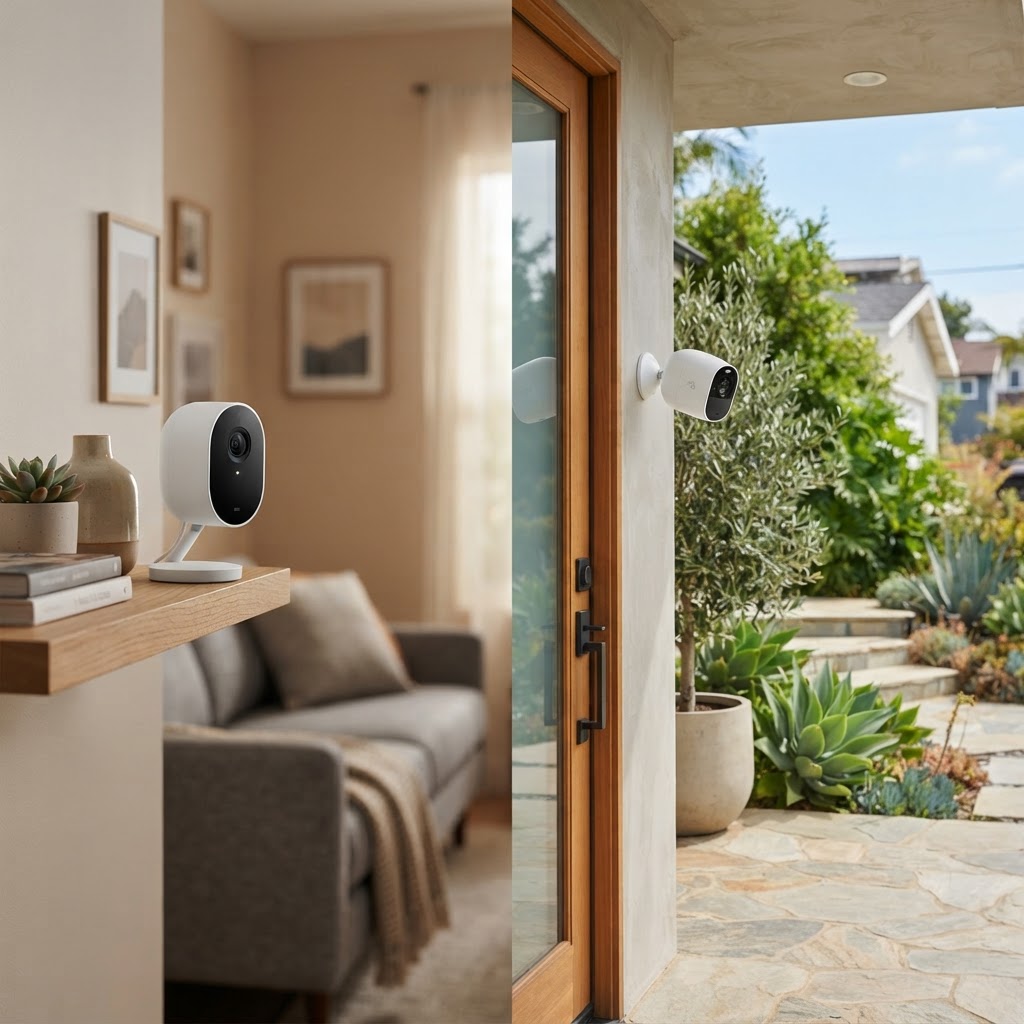
Outdoor cameras are engineered to withstand the elements. That means:
- Weather resistance rated for rain, heat, and dust (look for IP65 or higher ratings)
- Wider field of view to monitor driveways, yards, entryways, and parking areas
- Infrared night vision powerful enough for open, dark environments
- More durable housings that resist UV exposure and temperature swings — especially important in the LA heat
Indoor cameras are optimized for controlled environments. Key features include:
- Compact, discreet designs that blend into living spaces
- Two-way audio for communicating with family members or pets
- Motion zones tuned for smaller, enclosed spaces
- Often lighter and easier to reposition without tools
The bottom line: putting an indoor camera outside will likely void its warranty and degrade quickly. Putting an outdoor camera inside works technically, but it's often overkill — and bulkier than you want in a living room.
When You Need an Outdoor Camera
If your primary concern is what's happening outside your home, an outdoor camera is non-negotiable. Here's when it makes the most sense:
- You have a front door, gate, or driveway that you want to monitor for package theft, unwanted visitors, or general activity
- You're an Airbnb host who needs to verify guests are arriving and departing safely — outdoor cameras placed at entrances (disclosed to guests, of course) are a standard part of responsible hosting
- You live in a ground-floor apartment or house where street-level access is a concern
- You want recorded evidence in the event of a break-in, vandalism, or porch piracy
A well-placed outdoor camera near your front entrance pairs naturally with a Cryptronics video doorbell — together, they give you overlapping coverage so there are no blind spots around your most vulnerable entry point.
Why Cryptronics: Our outdoor cameras are designed for renter-friendly, no-drill installation. No landlord approval headaches, no wall damage, and no monthly subscription fees. You own the footage.
When You Need an Indoor Camera
Indoor cameras solve a different problem: knowing what's happening inside your home when you're not there. The most common use cases include:
- Monitoring common areas like living rooms, entryways, or hallways while you're at work or traveling
- Keeping an eye on pets or checking in on elderly family members
- Airbnb hosts managing shared spaces — note that cameras in private areas like bedrooms and bathrooms are strictly prohibited, but common areas are fair game when disclosed
- Renters who want interior documentation in case of disputes over property condition
Indoor cameras also work well as part of a layered system. Pair one near your front door's interior with Cryptronics door and window sensors — if a sensor triggers an alert, you can immediately pull up the camera feed to assess what's happening in real time.
Why Cryptronics: All our indoor cameras come with a 2-year warranty and 30-day returns, so you can test your setup risk-free. No subscriptions means your footage stays accessible without a recurring bill.
Can You Use Both? (Spoiler: Yes, and Here's How)
For most homeowners and serious Airbnb hosts, the smartest approach is a layered system that uses both camera types where each performs best. Here's a simple framework:
Outdoors:
- Front entrance or porch (camera + video doorbell)
- Driveway or parking area
- Back door or side gate if accessible
Indoors:
- Main living area or foyer
- Near valuables or a home office
- Common areas in short-term rentals
Renters in apartments often start with just one indoor camera near the front door and add a video doorbell at the entrance if their building allows it. That combination covers the most critical zone — the point of entry — without overcomplicating things.
Round out your setup with Cryptronics door and window sensors on vulnerable entry points and a smart lock on your front door. You'll get alerts the moment a door or window opens unexpectedly, and you can control access remotely without ever handing out a physical key.
What to Look for When Buying Either Type
Regardless of which camera type you need, here are the features worth prioritizing:
- Resolution: 1080p is the minimum; 2K or 4K gives you clearer detail for identifying faces or license plates
- Night vision: Essential for both types — look for true infrared or color night vision
- Motion detection with customizable zones: Reduces false alerts from passing cars or blowing curtains
- Local or cloud storage with no subscription: You shouldn't have to pay a monthly fee just to access your own footage
- Easy installation: Especially critical for renters — adhesive mounts and magnetic bases are your friends
- Warranty and return policy: A 2-year warranty signals confidence in the product; a 30-day return window lets you verify it works in your specific space
The Bottom Line
There's no universal winner in the indoor vs. outdoor camera debate — because they're solving different problems. The right answer depends on where your vulnerabilities actually are.
Start by walking through your home (or rental property) and asking: Where would an unauthorized person most likely enter? Where do I most need visual confirmation of what's happening? Those answers will point you directly to what you need.
Cryptronics makes it easy to build a smart, renter-friendly security system without monthly fees, complicated installations, or long-term commitments. Whether you need one camera or a full layered setup, every product is backed by a 2-year warranty and a 30-day return policy — so you can invest in your security with confidence.
Have questions about which camera is right for your specific setup? Contact our team — we're here to help you figure it out.