Indoor vs Outdoor Smart Cameras: Which Do You Need?
Not sure whether to get an indoor or outdoor smart camera? We break down the key differences so you can protect your space without overspending.

Marcus Reed
Smart Home Security Specialist
Marcus has spent over 8 years testing smart security devices in real rental apartments. He focuses on drill-free setups that anyone can install.
Indoor vs Outdoor Smart Cameras: Which Do You Actually Need?
Smart cameras are one of the most popular home security upgrades — and for good reason. They give you real-time visibility into what's happening at your property, whether you're home, at work, or halfway across the city. But walk into any security conversation and you'll quickly run into a common question: do I need an indoor camera, an outdoor camera, or both?
The honest answer depends on your living situation, your biggest security concerns, and how much coverage you actually want. Whether you're a renter in a Los Angeles apartment, a homeowner in the Valley, or an Airbnb host managing a short-term rental, this guide will help you make a smart, informed decision — without spending more than you need to.
What's the Actual Difference Between Indoor and Outdoor Cameras?
At first glance, indoor and outdoor cameras might look similar. But they're built for very different environments and threats.
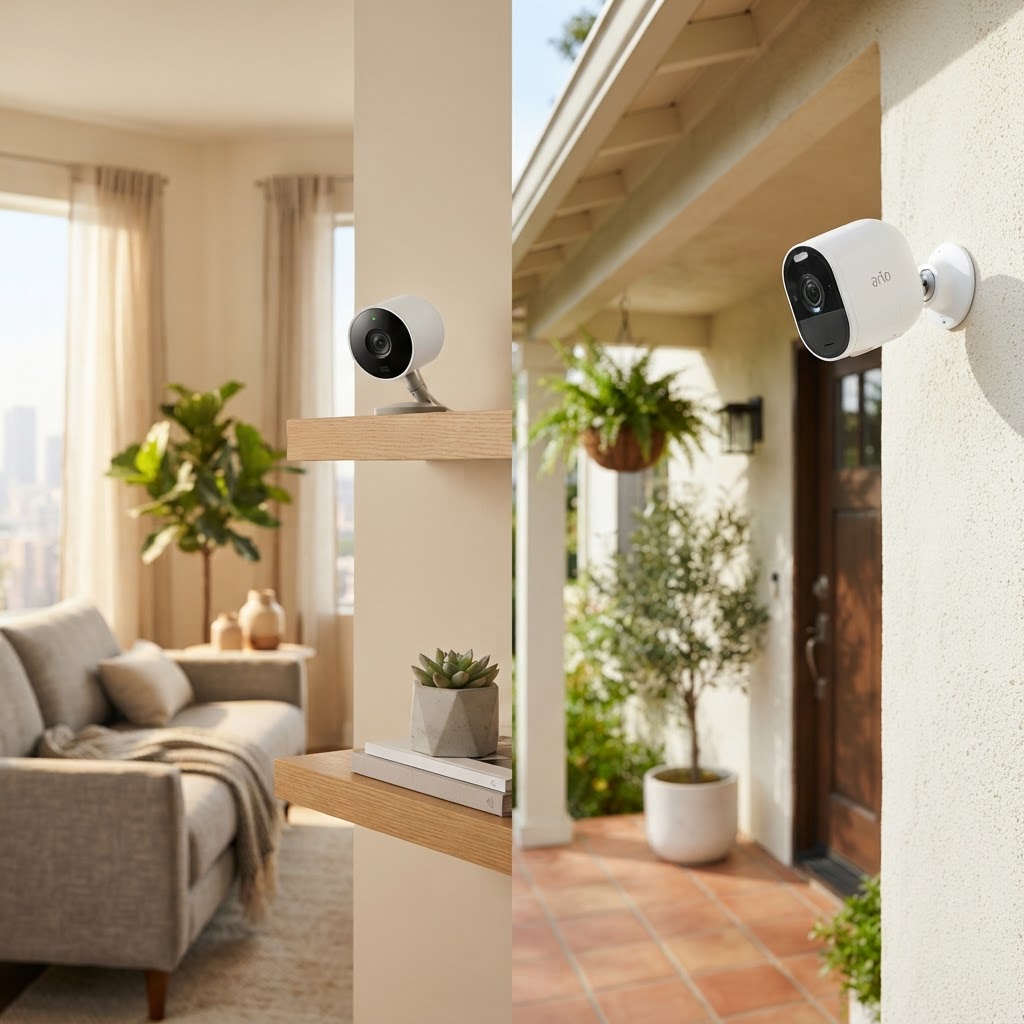
Outdoor cameras are designed to withstand the elements — sun, rain, dust, and temperature swings. They typically feature:
- Weatherproofing (usually rated IP65 or higher)
- Wider field of view to cover driveways, yards, or building entrances
- Night vision or color night vision optimized for dark exterior spaces
- Motion zones to filter out passing cars or swaying trees
- Stronger housings to resist tampering or vandalism
Indoor cameras are built for controlled environments. They tend to be more compact and discreet, with features like:
- Two-way audio for communicating with family members or pets
- Privacy modes (physical lens covers or auto-shutoff) for when you're home
- Wider-angle lenses to monitor large interior spaces like living rooms
- Lower price points, since they don't need weather resistance
Both types typically offer HD video, cloud or local storage, and motion alerts — but putting an indoor camera outside will shorten its lifespan significantly, and an outdoor camera indoors is often overkill.
When an Outdoor Camera Is the Right Call
If your primary concern is deterring and documenting threats before they reach your front door, an outdoor camera is your first line of defense.
For homeowners, this usually means covering the front door, back yard, garage, and any side gates. For Airbnb hosts, an outdoor camera at the entrance — paired with a Cryptronics video doorbell — lets you monitor guest arrivals and departures without ever entering the unit.
Outdoor cameras are especially valuable in Los Angeles, where package theft and car break-ins are persistent neighborhood concerns. A visible camera on your porch or driveway can be enough to redirect a would-be thief to an easier target.
Cryptronics outdoor cameras are designed with no-drill mounting options, making them ideal for renters who can't permanently alter their walls or fences. You get full exterior coverage without risking your security deposit.
- No monthly subscription fees — footage is yours to keep
- 2-year warranty for peace of mind
- Easy repositioning if you move
When an Indoor Camera Makes More Sense
Indoor cameras shine when you need visibility inside your space — and when you want awareness without the complexity of a full exterior setup.
Common use cases include:
- Renters who want to monitor common entry points like front doors or hallways from inside
- Airbnb hosts who want to ensure no unauthorized access inside a unit between bookings (note: always disclose indoor cameras to guests per Airbnb policy)
- Homeowners monitoring living areas, home offices, or valuables while traveling
- Pet owners checking in on animals during the day
An indoor Cryptronics camera pairs seamlessly with our door and window sensors for layered protection. If a sensor triggers an alert, you can immediately pull up the camera feed to assess the situation — no guesswork, no unnecessary panic.
Do You Actually Need Both?
For many people — especially homeowners and active Airbnb hosts — the answer is yes. But you don't need to go overboard.
A practical, cost-effective setup might look like this:
For renters:
- 1 outdoor camera or video doorbell at the front entrance
- 1 indoor camera covering the main living area or hallway
- Door/window sensors on entry points
For Airbnb hosts:
- Outdoor camera or video doorbell at the property entrance
- Smart lock for keyless, remote check-in
- Indoor camera in common areas (disclosed to guests)
- Smoke detector and water leak sensor for property protection between stays
For homeowners:
- 2 outdoor cameras (front and back)
- 1–2 indoor cameras for interior coverage
- Door/window sensors, smoke detectors, and a smart power strip to round out your system
All Cryptronics products are designed to work together and can be managed from a single app — no complicated wiring, no technician required.
What to Look for Before You Buy
Regardless of which type you choose, here are the features that actually matter:
- Resolution: 1080p is the baseline. Higher is better for identifying faces or license plates.
- Night vision: Essential for both indoor and outdoor use. Color night vision is a worthwhile upgrade outdoors.
- Storage: Look for local storage options or free cloud storage. Avoid cameras that lock critical features behind a subscription.
- Installation: No-drill or adhesive mounting is a must for renters.
- Privacy controls: For indoor cameras especially, physical privacy shutters matter.
- Warranty and returns: Cryptronics backs every camera with a 2-year warranty and a 30-day return policy — so you can buy with confidence.
The Bottom Line
There's no universal right answer — but there is a right answer for your situation. Outdoor cameras protect your perimeter. Indoor cameras protect your interior. Together, they give you complete awareness.
The good news: you don't need a complicated, expensive system to feel genuinely secure. Start with the biggest vulnerability in your space, add one layer at a time, and choose products that don't lock you into monthly fees or require a landlord's permission to install.
Cryptronics cameras — indoor and outdoor — are built specifically for that kind of flexible, renter-friendly security. No subscriptions. No drills. No compromises.
Ready to find the right camera for your space? Browse the Cryptronics smart camera lineup and build a setup that actually fits your life.