Indoor vs Outdoor Smart Cameras: Which Do You Need?
Not sure whether to get an indoor or outdoor smart camera? We break down the differences so you can protect your space without overspending.

Marcus Reed
Smart Home Security Specialist
Marcus has spent over 8 years testing smart security devices in real rental apartments. He focuses on drill-free setups that anyone can install.
Indoor vs Outdoor Smart Cameras: Which Do You Actually Need?
Smart cameras are one of the most impactful upgrades you can make to your home security setup — but walk into any electronics store (or scroll through any product page) and you'll quickly run into a familiar question: do you need an indoor camera, an outdoor camera, or both? The answer depends on your living situation, your biggest security concerns, and how much you want to invest.
Whether you're a renter in a Los Angeles apartment, a homeowner in the suburbs, or an Airbnb host managing a short-term rental, this guide will help you make a smart, practical decision — no upselling, no fluff.
What's the Actual Difference Between Indoor and Outdoor Cameras?
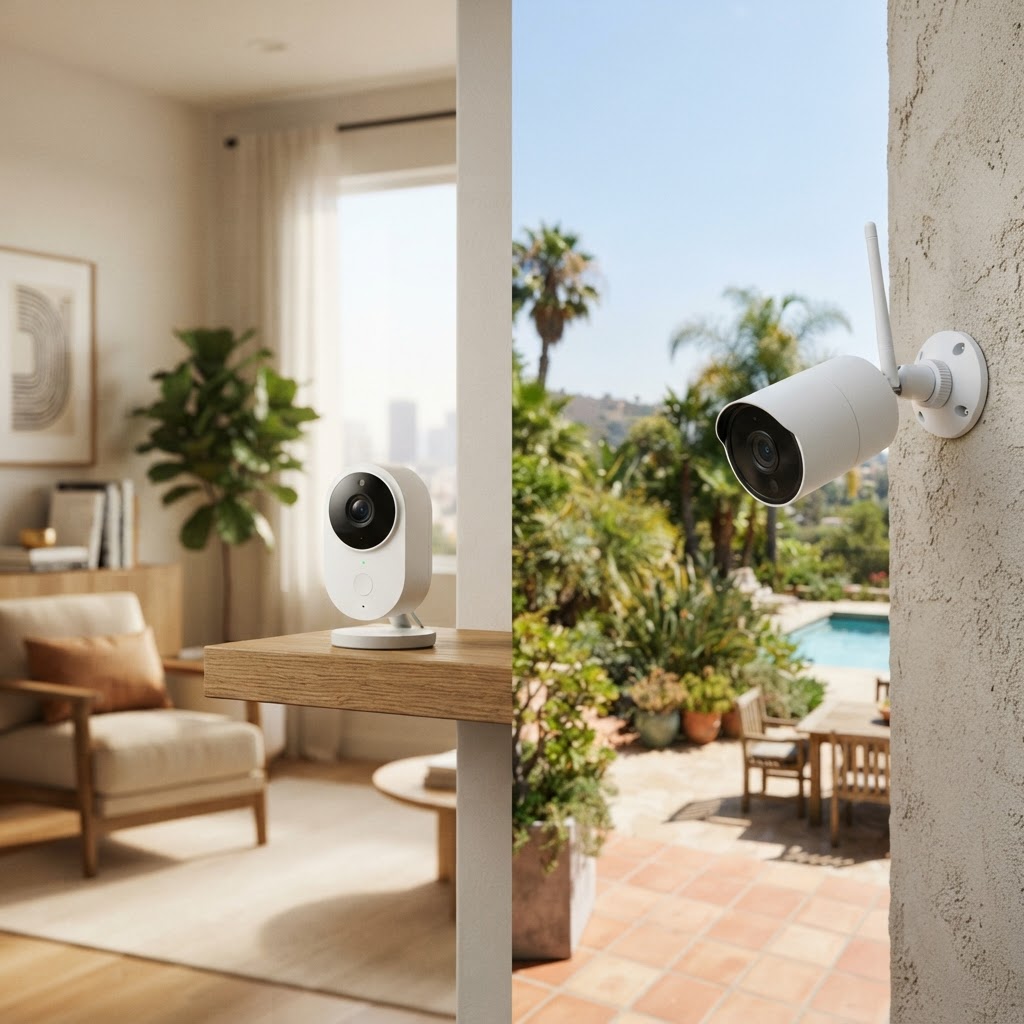
At first glance, indoor and outdoor cameras might look similar. But they're built for very different environments.
Outdoor cameras are designed to handle the elements — UV exposure, rain, heat, and dust. In Los Angeles, that means surviving scorching summer temperatures and the occasional coastal moisture. Key features to look for include:
- Weather resistance (IP65 or higher) — protects against dust and water
- Night vision or color night vision — essential for monitoring driveways, gates, and entryways after dark
- Wide field of view — covers more ground with fewer cameras
- Motion zones — filters out cars, trees, and other non-threat movement
Indoor cameras are optimized for interior environments where weather isn't a concern. They tend to be more compact, blend into home decor more naturally, and often include features like two-way audio and privacy shutters. Key features include:
- 360-degree or wide-angle coverage — great for open living areas
- Two-way audio — communicate with pets, kids, or guests remotely
- Privacy mode — physically blocks the lens when you're home
- Compact, discreet design — doesn't feel intrusive in a bedroom or nursery
Using an indoor camera outside (or vice versa) is a common and costly mistake. An indoor camera exposed to direct sunlight and heat will degrade quickly and void any warranty coverage.
When You Should Prioritize an Outdoor Camera
If you have any of the following, start with outdoor coverage:
- A front door, driveway, or garage that's accessible from the street
- A backyard, patio, or side gate that's out of sightlines
- Package theft concerns — a persistent issue in many LA neighborhoods
- You're an Airbnb host who needs to monitor property exteriors between guest stays (always disclose camera placement to guests)
A well-placed outdoor camera at your main entrance works hand-in-hand with a Cryptronics video doorbell, giving you a layered view of who's approaching and who's at the door. Combined with a Cryptronics smart lock, you can monitor and control access to your property entirely from your phone — no subscription required.
Why Cryptronics? Our outdoor cameras come with a 2-year warranty, require no monthly fees, and are designed for straightforward installation — no drilling required for most setups, making them ideal for renters who can't modify their units.
When You Should Prioritize an Indoor Camera
Indoor cameras make the most sense when:
- You're renting and your main concern is what happens inside your unit
- You have pets and want to check in during the day
- You're an Airbnb host monitoring common areas like entryways or living rooms (again — always disclose this to guests and follow platform guidelines)
- You want to monitor a specific room, like a home office with valuables or a baby's nursery
- Your building already has exterior security, such as a gated complex with on-site cameras
For renters especially, an indoor camera paired with Cryptronics door and window sensors creates a highly effective security layer without any permanent installation. If a door or window opens unexpectedly, you get an alert instantly.
Why Cryptronics? Our indoor cameras are plug-and-play, require zero drilling, and come with a 30-day return policy — so if it doesn't fit your space or routine, you're not stuck with it.
Do You Need Both? A Practical Framework
Here's a simple way to decide:
You probably need both if:
- You own a house or rent a standalone unit with outdoor space
- You're hosting short-term rentals and need full property visibility
- You've experienced or are concerned about both break-ins and interior incidents
Start with outdoor only if:
- You live in a high-foot-traffic area with package theft or vandalism concerns
- Your interior is already covered by building security
- Budget is a primary constraint — exterior deterrence typically has the highest ROI
Start with indoor only if:
- You're in a secured apartment building with controlled access
- Your concern is internal monitoring (pets, kids, in-home workers)
- You want to test smart home security before expanding your setup
A practical starter setup for most LA renters: one Cryptronics indoor camera for the main living area, door and window sensors on entry points, and a video doorbell if your lease allows it. Homeowners and Airbnb hosts should add at least one outdoor camera covering the primary entrance.
Smart Camera Add-Ons Worth Considering
Cameras work best as part of a layered security system. Depending on your setup, consider pairing them with:
- Cryptronics smart locks — control and log entry without physical keys
- Cryptronics smoke detectors — adds life-safety monitoring alongside security
- Cryptronics water leak sensors — especially useful for Airbnb hosts monitoring properties remotely
- Cryptronics smart power strips — manage connected devices efficiently and safely
None of these require a professional installer or a monthly monitoring contract. That's by design.
The Bottom Line
Indoor and outdoor cameras solve different problems — and knowing which one fits your situation saves you money and frustration. For most renters, an indoor camera and door sensors is the right starting point. Homeowners and Airbnb hosts benefit most from adding outdoor coverage at key entry points.
The good news: you don't have to figure it all out at once. Cryptronics products are modular, subscription-free, and backed by a 2-year warranty — so you can build your security setup at your own pace without locking yourself into ongoing costs or complicated installations.
Start with what matters most to you. Expand when you're ready.