Indoor vs Outdoor Smart Cameras: Which Do You Need?
Not sure whether to get an indoor or outdoor smart camera? We break down the key differences so you can protect your space without overspending.

David Chen
Tech Reviewer & Airbnb Host
David reviews smart home tech and manages short-term rentals. He knows exactly what hosts need to keep guests safe without intrusive setups.
Indoor vs Outdoor Smart Cameras: Which Do You Actually Need?
Smart cameras are one of the fastest ways to level up your home security — but walking into the market without a plan can leave you overwhelmed, overspending, or worse, underprotected. The most common question we hear from renters, homeowners, and Airbnb hosts in Los Angeles is simple: do I need an indoor camera, an outdoor camera, or both?
The honest answer depends on what you're trying to protect, where you live, and how you use your space. This guide cuts through the noise and helps you make a confident, informed decision — no monthly fees or complicated installations required.
What's the Actual Difference Between Indoor and Outdoor Cameras?
At a glance, cameras are cameras. But the engineering behind indoor and outdoor models is quite different, and those differences matter in the real world.
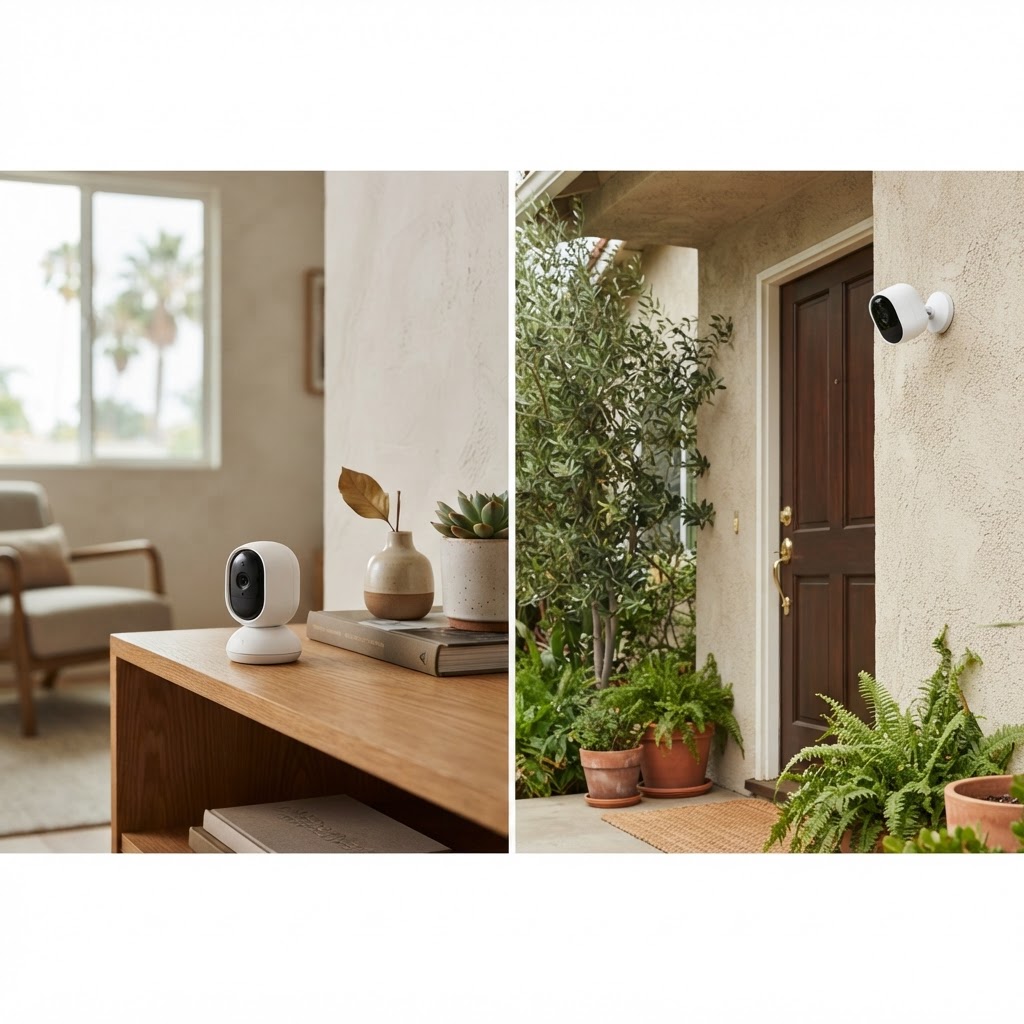
Indoor cameras are designed for controlled environments — living rooms, entryways, nurseries, and home offices. They prioritize:
- Discreet, compact form factors that blend into your décor
- Wide-angle lenses suited for room-sized coverage
- Night vision optimized for low-light interiors
- Two-way audio for communicating with pets, kids, or guests
- Easy tabletop or shelf placement — no drilling required
Outdoor cameras are built to survive the elements. In a city like Los Angeles, that means handling intense UV exposure, coastal humidity, Santa Ana wind conditions, and the occasional rain event. Key outdoor features include:
- Weatherproof ratings (IP65 or higher) to handle rain, dust, and heat
- Wider dynamic range to handle harsh California sunlight and deep shadows
- Tamper-resistant housings that deter physical interference
- Motion detection zones tuned for larger, open areas like driveways and yards
- Infrared or color night vision powerful enough to cover 20–30 feet outdoors
Using an indoor camera outside — even temporarily — can void your warranty and lead to premature failure. Always use the right tool for the right environment.
Who Should Prioritize Outdoor Cameras?
If your primary concern is deterring package theft, monitoring a shared driveway, or keeping an eye on your front door from a distance, an outdoor camera is your first line of defense.
Renters in ground-floor units in LA neighborhoods like Silver Lake, Echo Park, or Koreatown often deal with porch piracy and street-level access issues. A weatherproof outdoor camera mounted near your door creates a visible deterrent and gives you timestamped footage if something does go wrong.
Homeowners with yards or garages benefit enormously from outdoor coverage. Side gates, detached garages, and backyard access points are common blind spots that outdoor cameras address directly.
Airbnb hosts have a specific and well-documented need here. Guests arrive at all hours, and knowing exactly when someone enters or exits your property — without invading their privacy indoors — is both practical and legally straightforward. Pair an outdoor camera with a Cryptronics smart lock and you have a complete, keyless entry and monitoring solution that guests actually appreciate.
Cryptronics Note: Our outdoor cameras feature no-drill magnetic and adhesive mounting options, so you won't lose your security deposit. They come with a 2-year warranty and free 30-day returns — no subscription required to access your footage.
Who Should Prioritize Indoor Cameras?
Outdoor cameras tell you what's happening outside. Indoor cameras tell you what's happening inside — and that distinction is critical for certain use cases.
Pet owners and parents use indoor cameras daily, not just during emergencies. Check in on your dog during a long workday, monitor a baby's room, or keep an eye on an elderly parent — all from your phone.
Renters with roommates or frequent guests often want a record of interior activity for liability purposes or simple peace of mind. Placing a camera in a common area (with proper notice, of course) is a smart, low-conflict way to document what's happening in a shared space.
Airbnb hosts with shared spaces or multi-room properties sometimes use indoor cameras in common areas like hallways or entryways — never in bedrooms or bathrooms. This helps hosts ensure house rules are being followed without being intrusive.
Cryptronics indoor cameras integrate seamlessly with our door and window sensors, giving you a fuller picture: you'll get an alert when a sensor triggers and be able to pull up live footage immediately to assess the situation.
Cryptronics Note: All indoor cameras are designed for no-drill installation — they sit on shelves, mount on walls with removable adhesive, or attach magnetically. No tools, no holes, no hassle.
Do You Need Both? A Practical Framework
Here's a simple way to think about it:
| Your Situation | What You Likely Need | |---|---| | Apartment renter, upper floor | Indoor camera + door/window sensors | | Apartment renter, ground floor | Outdoor camera (entry) + indoor camera | | Single-family homeowner | Both — outdoor for perimeter, indoor for interior | | Airbnb host | Outdoor camera + video doorbell + smart lock | | Short-term rental with shared spaces | Outdoor camera + indoor hallway camera |
For most Los Angeles renters, starting with one outdoor camera at your primary entry point and one indoor camera in your main living area gives you 80% of the protection value at a fraction of the cost of a full system.
You can always expand. Cryptronics products are designed to work together — add a video doorbell to see who's buzzing before you open up, layer in smoke detectors and water leak sensors for whole-home awareness, or add a smart power strip to monitor electronics remotely. Every device works independently and connects simply, with no hub fees or monthly monitoring contracts.
The Renter-Friendly Advantage
One of the biggest hesitations renters have about smart cameras is installation. Drilling into walls or door frames risks your security deposit and may violate your lease. That's why every Cryptronics camera — indoor and outdoor — is designed with renters in mind:
- No permanent drilling required on any model
- Removable adhesive and magnetic mounts leave zero marks
- 2-year warranty on all hardware
- 30-day no-hassle returns if the product isn't right for your space
- No subscription fees — your footage, your data, no recurring charges
The Bottom Line
There's no single right answer to the indoor vs. outdoor debate — but there is a right answer for your situation. Outdoor cameras are your best defense against external threats and package theft. Indoor cameras give you visibility and peace of mind inside your home. Together, they form a layered security approach that's hard to beat.
Start with your biggest vulnerability, choose the camera built for that environment, and build from there. With no monthly fees, renter-friendly installation, and a 2-year warranty backing every product, Cryptronics makes it easy to get protected today — and expand whenever you're ready.