How to Secure a Sliding Glass Door with Smart Sensors
Sliding glass doors are one of the most vulnerable entry points in any home. Learn how smart sensors and no-drill security upgrades can protect yours today.

Marcus Reed
Smart Home Security Specialist
Marcus has spent over 8 years testing smart security devices in real rental apartments. He focuses on drill-free setups that anyone can install.
How to Secure a Sliding Glass Door with Smart Sensors
Sliding glass doors are a staple of Southern California living — they open up to patios, backyards, and those coveted ocean breezes. But they're also one of the most commonly exploited entry points for break-ins. Unlike a solid front door, a sliding glass door can be easier to force open, lift off its track, or simply shatter. For renters, homeowners, and Airbnb hosts in the Los Angeles area, securing that door isn't optional — it's essential.
The good news? You don't need to drill holes, sign up for a monthly monitoring plan, or hire a contractor. Modern smart sensors and renter-friendly security devices make it surprisingly straightforward to lock down your sliding glass door without leaving a mark on the frame.
Why Sliding Glass Doors Are a Security Weak Point
Before we get into solutions, it's worth understanding the problem. Most sliding glass doors have basic latch locks that can be defeated with minimal effort. A determined intruder can:
- Lift the door off its track — many older doors have shallow track channels
- Jiggle the latch open — standard latches aren't designed to resist force
- Break or cut the glass — especially at ground level or in low-visibility areas
- Slip a tool through the frame gap — to disengage the lock from outside
For Airbnb hosts, this risk is compounded: guests may leave doors unlocked, and you're not always there to check. For renters, the challenge is doing all of this without losing your security deposit.
Layer 1: Start with a Smart Door/Window Sensor
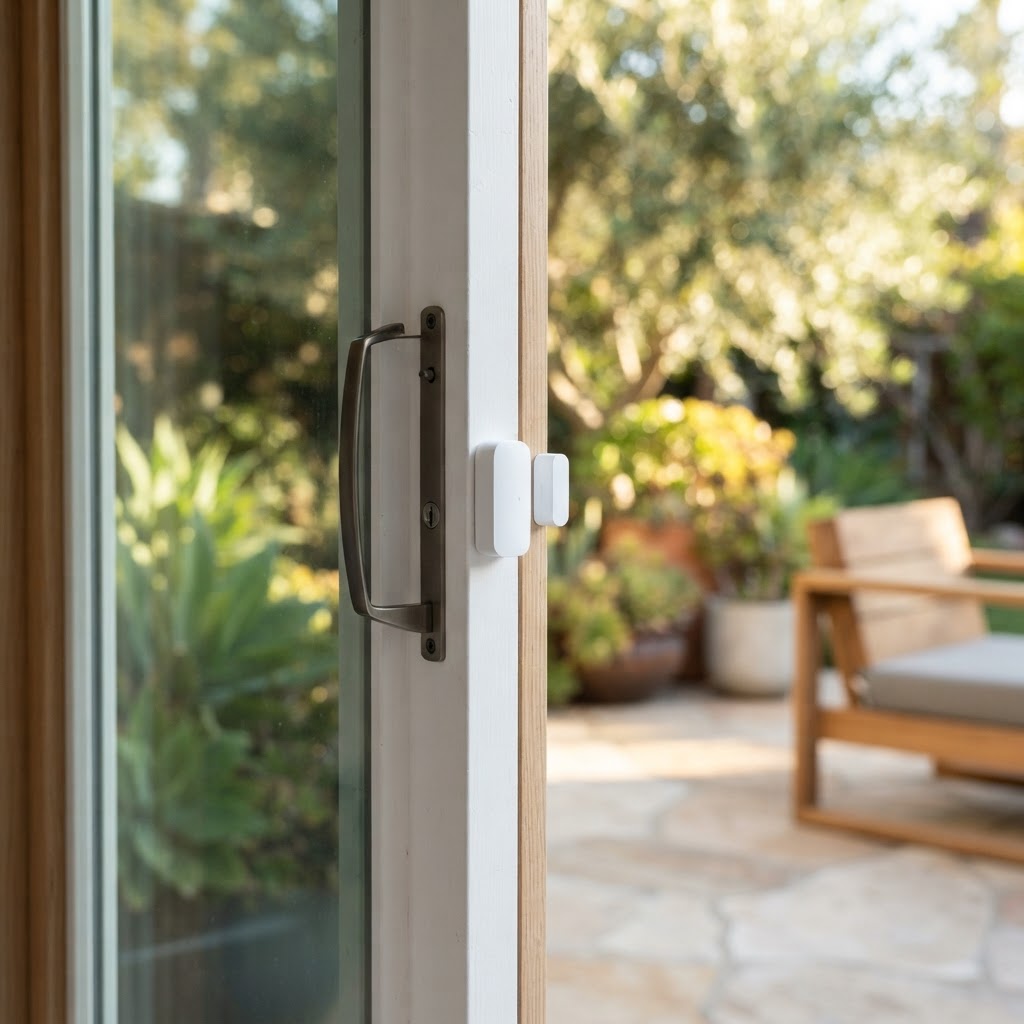
The first and most impactful upgrade you can make is adding a smart door/window sensor to your sliding glass door. These small, discreet devices attach to the door frame and the door itself using adhesive — no drilling required — and trigger an alert the moment the door is opened or tampered with.
Cryptronics door/window sensors are designed specifically for renter-friendly installation. They go on in seconds, come off cleanly, and are backed by a 2-year warranty and 30-day return policy.
What a smart sensor gives you:
- Instant smartphone alerts when the door opens or is disturbed
- Tamper detection if someone tries to remove or bypass the sensor
- Works 24/7 without any subscription or monthly fee
- Real-time peace of mind whether you're home or across town
For Airbnb hosts, you can monitor door activity between guest stays to confirm checkout and flag any unexpected entries — all without invading guest privacy.
Layer 2: Add a Video Doorbell or Outdoor Camera
Sensors tell you when something happened. A camera tells you what happened and who did it. Positioning a video doorbell or outdoor smart camera to cover your sliding glass door and adjacent patio creates a visible deterrent that often stops a break-in before it starts.
Research consistently shows that visible cameras reduce the likelihood of a property being targeted. Criminals look for easy, low-risk opportunities — a camera changes that calculation immediately.
Tips for camera placement near sliding glass doors:
- Mount at a height that captures faces without distortion (7–9 feet is ideal)
- Angle to cover the full door panel and any nearby access paths
- Ensure the camera covers any blind spots like side gates or fences
Cryptronics outdoor cameras feature wide-angle lenses, night vision, and local storage — meaning your footage stays with you, not on a third-party server. And because there's no subscription required, you're not paying monthly just to access your own recordings.
Layer 3: Reinforce the Physical Lock
Smart sensors and cameras are powerful, but physical reinforcement is still your foundation. A few low-cost, no-damage measures work well alongside your smart devices:
- Track bar or rod — A cut-down wooden dowel or metal bar placed in the bottom track physically prevents the door from sliding open even if the latch is defeated
- Flip lock or secondary latch — Adhesive-mounted secondary locks add a second barrier without permanent hardware
- Anti-lift pins — Small pins inserted into the top track prevent the door from being lifted off
Pair these with your Cryptronics door/window sensor and you've created a layered defense: the physical barrier slows an intruder, and the sensor immediately alerts you if anything moves.
Layer 4: Protect the Surrounding Space
A smart home security setup works best when it thinks holistically. Your sliding glass door likely opens to a patio or outdoor area — and that space deserves attention too.
Consider adding:
- Smart power strips near outdoor outlets to control and monitor power to outdoor lights or devices, ensuring your patio is always well-lit at night
- Water leak sensors if your sliding door area is near a washing machine hookup, utility sink, or HVAC drain — flooding near an entry point creates both security and property damage risk
- Smoke detectors inside rooms adjacent to the sliding door, especially if your patio includes a grill or fire pit area
These additions might seem unrelated to break-in prevention, but a comprehensive approach to home safety — covering fire, water, and intrusion — is what separates a reactive setup from a truly secure home.
A Note for Renters and Airbnb Hosts in Los Angeles
LA's rental market means many residents can't make permanent modifications to their units. That's exactly why Cryptronics products are built with renters in mind. Every device in our lineup:
- Installs without drilling using industrial-grade adhesive or tension mounts
- Leaves no damage when removed — important for deposit protection
- Requires no monthly fees — you pay once and own your security
- Comes with a 2-year warranty and 30-day hassle-free returns
For Airbnb hosts, renter-friendly devices also mean faster setup between stays and easier repositioning as your space evolves.
Conclusion
Securing a sliding glass door doesn't require a major renovation or an ongoing service contract. With the right combination of smart door/window sensors, outdoor cameras, physical reinforcement, and a few supporting devices, you can turn one of your home's biggest vulnerabilities into a well-monitored, well-protected entry point.
Start with a sensor, add a camera, reinforce the track — and you'll sleep a lot better knowing that beautiful view isn't also an open invitation. Cryptronics makes every step of that process straightforward, affordable, and completely renter-friendly.