How to Secure a Sliding Glass Door with Smart Sensors
Sliding glass doors are one of the most vulnerable entry points in any home. Learn how smart sensors and no-drill security tools can protect yours today.

David Chen
Tech Reviewer & Airbnb Host
David reviews smart home tech and manages short-term rentals. He knows exactly what hosts need to keep guests safe without intrusive setups.
How to Secure a Sliding Glass Door with Smart Sensors
Sliding glass doors are a staple of Southern California living — they open up to patios, backyards, and balconies, flooding your space with natural light and that coveted indoor-outdoor flow. But here's the uncomfortable truth: they're also one of the most common entry points for break-ins. Unlike a solid front door with a deadbolt, a standard sliding door often relies on a flimsy latch that can be defeated in seconds with the right amount of force or a simple lifting technique.
The good news? You don't need to tear up your rental agreement or spend a fortune on a professional security system to fix this. With the right smart sensors and a few renter-friendly accessories, you can make your sliding glass door significantly harder to breach — no drilling, no monthly fees, and no headaches.
Why Sliding Glass Doors Are a Security Weak Point
Before jumping to solutions, it helps to understand exactly what makes sliding doors vulnerable:
- Weak latches: Most factory-installed sliding door latches are not true locks. They're designed to keep the door closed, not to resist forced entry.
- Easy to lift off the track: An intruder can sometimes pop a sliding door off its track from the outside if the door isn't secured from within.
- Large glass panels: While breaking glass is noisy, it remains an option for a determined intruder — and it can happen faster than you think.
- Low visibility: Sliding doors that open to a backyard or side yard are often out of sight from the street, giving would-be intruders cover to work.
Understanding these vulnerabilities makes it clear that a layered approach — combining physical deterrents with smart sensors — is the most effective strategy.
Start with a Smart Door/Window Sensor
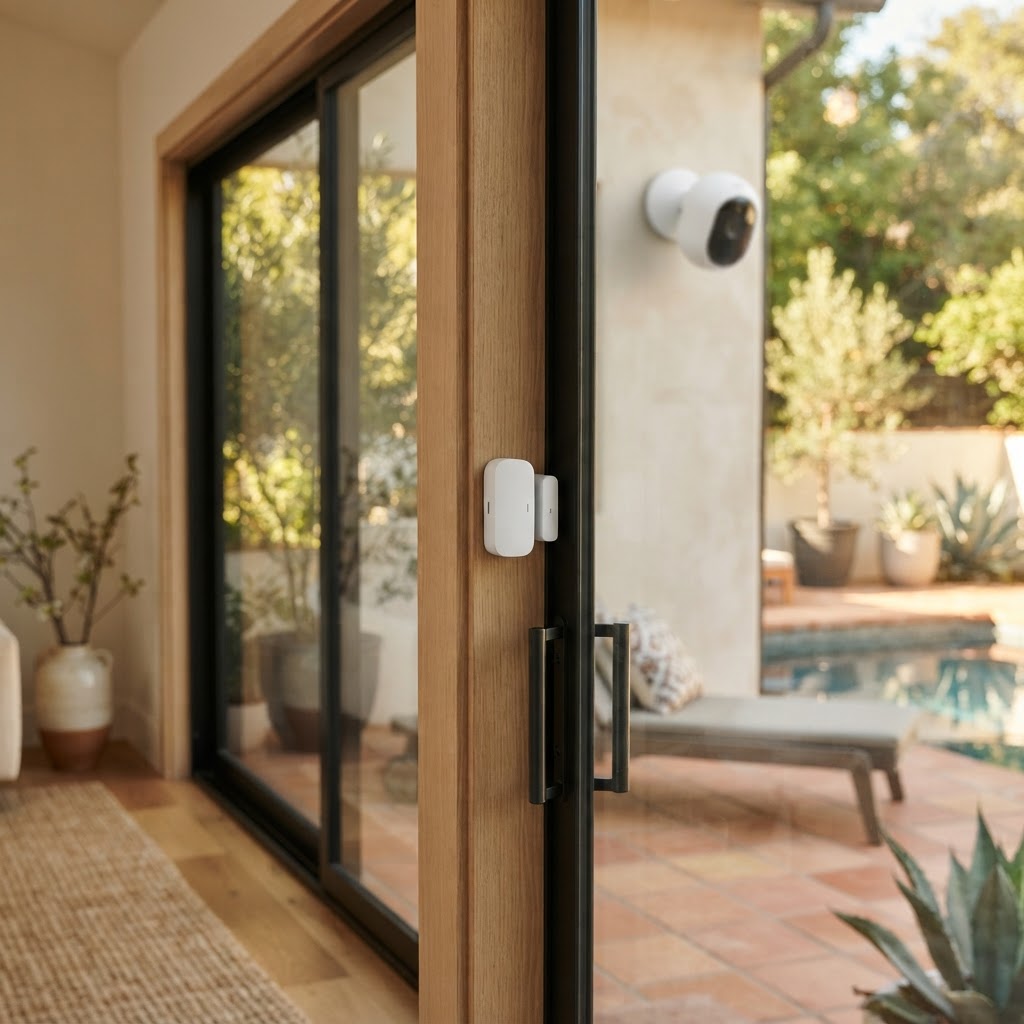
The single most impactful upgrade you can make is installing a smart door/window sensor on your sliding door. Cryptronics door and window sensors use a simple magnetic contact design: one piece mounts to the door frame, the other to the door itself. When the door is opened — or if the magnetic contact is broken — the sensor instantly triggers an alert to your smartphone.
What makes this particularly powerful for sliding doors:
- Instant notifications: You get alerted the moment the door is opened, whether you're home or away.
- No-drill installation: Cryptronics sensors attach with industrial-strength adhesive, making them fully renter-friendly and landlord-approved.
- No subscription required: Alerts go straight to your phone with no monthly monitoring fee.
- 2-year warranty + 30-day returns: Buy with confidence knowing you're covered.
For Airbnb hosts, this sensor is especially valuable — you'll know exactly when guests are coming and going without any invasive monitoring.
Add a Video Doorbell or Outdoor Camera for Visible Deterrence
Sensors notify you after something happens. Cameras and video doorbells help prevent it from happening in the first place. Research consistently shows that visible security cameras are one of the most effective deterrents against property crime.
For sliding glass doors that open to a patio or backyard, mounting a Cryptronics smart outdoor camera with a clear line of sight to the door creates a visible security presence. Key benefits include:
- Motion-triggered recording: The camera activates when it detects movement near the door, capturing footage automatically.
- Night vision: Most break-ins happen at night or in low-light conditions — night vision ensures your coverage doesn't drop when the sun does.
- Two-way audio: Deter visitors in real time by speaking through the camera from your phone.
- No monthly storage fees: Local storage options mean your footage stays on your device, not behind a paywall.
If your sliding door is near your main entrance, pairing an outdoor camera with a Cryptronics video doorbell gives you a comprehensive view of all activity around your home's perimeter.
Layer in Physical Reinforcements
Smart sensors work best as part of a layered security plan. Here are practical physical reinforcements that pair perfectly with your smart devices:
- Door bar or security rod: A simple cut-to-length bar placed in the bottom track of the sliding door prevents it from being slid open even if the latch is defeated. Some renters use a wooden dowel; purpose-built adjustable bars are more reliable.
- Anti-lift pins or brackets: These prevent the door from being lifted off its track. Many hardware stores carry them for under $20.
- Window film: Security window film won't stop a break-in entirely, but it significantly slows down glass breakage, buying critical seconds for your sensor alerts to reach you.
Think of physical reinforcements as your first line of defense and smart sensors as your notification and evidence layer. Together, they create a system that's much harder to defeat quickly and quietly.
Consider Smoke and Water Leak Sensors for Full-Home Coverage
Once you're thinking about your sliding door's security, it's worth considering the bigger picture of whole-home safety — especially if you're a renter or Airbnb host in Los Angeles, where older building stock can mean older infrastructure.
Cryptronics smoke detectors and water leak sensors round out a truly comprehensive safety setup:
- Smoke detectors: Get immediate smartphone alerts in case of smoke or fire, even when you're not home — critical for Airbnb hosts with guests in the property.
- Water leak sensors: Place these under sinks, near water heaters, or by the washing machine. A slow leak caught early can prevent thousands of dollars in water damage.
Both devices install without any drilling or wiring, and like all Cryptronics products, they come with no subscription fees, a 2-year warranty, and a 30-day return window.
A Note for Renters and Airbnb Hosts in Los Angeles
One of the most common barriers to smart home security for renters is the fear of violating lease terms. Cryptronics products are designed specifically with this in mind. Every device in our lineup:
- Installs without drilling or permanent modifications
- Removes cleanly when you move out
- Requires no professional installation or ongoing subscription
For Airbnb hosts, this means you can add professional-grade security to your listing without any permanent changes to your property — and impress guests with the kind of thoughtful safety details that earn five-star reviews.
Conclusion
Your sliding glass door doesn't have to be your home's biggest vulnerability. With a layered approach — starting with a Cryptronics door/window sensor, backed by an outdoor camera, and reinforced with simple physical deterrents — you can dramatically improve your security without violating your lease, paying monthly fees, or picking up a drill.
Security isn't about one perfect device. It's about making your home a less attractive and more difficult target than the next one. Start with the sliding door, and build from there.