The Hidden Costs of Subscription Security Systems Explained
Subscription security systems can cost hundreds more than advertised. Learn what you're really paying for — and why a no-fee alternative makes more sense.

Priya Sharma
Home Automation Writer
Priya writes practical guides for renters and first-time homeowners. She's obsessed with finding budget-friendly smart home solutions.
The Hidden Costs of Subscription Security Systems Explained
When you sign up for a home security system, the advertised monthly price rarely tells the whole story. A $10/month plan sounds reasonable — until you factor in activation fees, equipment markups, long-term contracts, and the creeping realization that you don't actually own anything. For renters, homeowners, and Airbnb hosts in Los Angeles, these hidden costs can quietly drain hundreds of dollars a year from your budget.
This post breaks down exactly where subscription-based security systems cost more than they appear — and what a smarter, fee-free approach looks like.
1. The True Price of "Affordable" Monthly Plans
Subscription security companies are experts at making their pricing look simple. But there are layers beneath that headline number.
Common fees you may not see upfront:
- Activation or installation fees — often $100–$200 just to get started
- Professional monitoring fees — typically $20–$60/month, billed annually
- Equipment lease costs — many plans don't let you own the hardware outright
- Contract cancellation penalties — early termination fees can reach $300+
- Equipment upgrade fees — locked into outdated hardware unless you pay more
Run the numbers on a mid-tier subscription plan over three years and you're often looking at $800–$1,500 in total costs — for equipment you may not even own when the contract ends.
For a renter who moves every 12–18 months, or an Airbnb host who needs flexibility, that's a particularly bad deal.
2. You're Paying for Monitoring You May Not Need
Professional monitoring — where a call center watches your cameras and contacts emergency services — is the core value proposition of most subscription plans. But it's worth asking: do you actually need it?
Modern smart home security devices send instant push notifications directly to your phone the moment a sensor triggers, a camera detects motion, or a smoke detector goes off. If you're reachable by phone (and most of us are, constantly), you can act on an alert in seconds.
What self-monitoring actually gives you:
- Real-time alerts from door/window sensors and cameras
- Live video feeds from anywhere via your smartphone
- The ability to call 911 directly — faster than many monitoring centers
- Full control over your privacy and data
Cryptronics devices are built around this self-monitoring model. There's no middleman, no monthly fee, and no waiting for a call center to decide whether your alert is worth acting on.
3. Equipment You Don't Own, Can't Take With You
One of the most overlooked costs of subscription security is what happens when you move. Many subscription services lease their equipment — meaning the hardware belongs to them, not you. When you relocate, you either pay to transfer service, buy out the equipment, or start over entirely.
For Los Angeles renters especially, this is a real problem. The average LA renter moves every two to three years. Losing your security investment each time adds up fast.
The smarter alternative:
- Purchase equipment outright — it's yours forever
- Take it with you when you move
- No-drill installation options mean no damage to walls or door frames
- Works in apartments, condos, rental homes, and short-term rentals
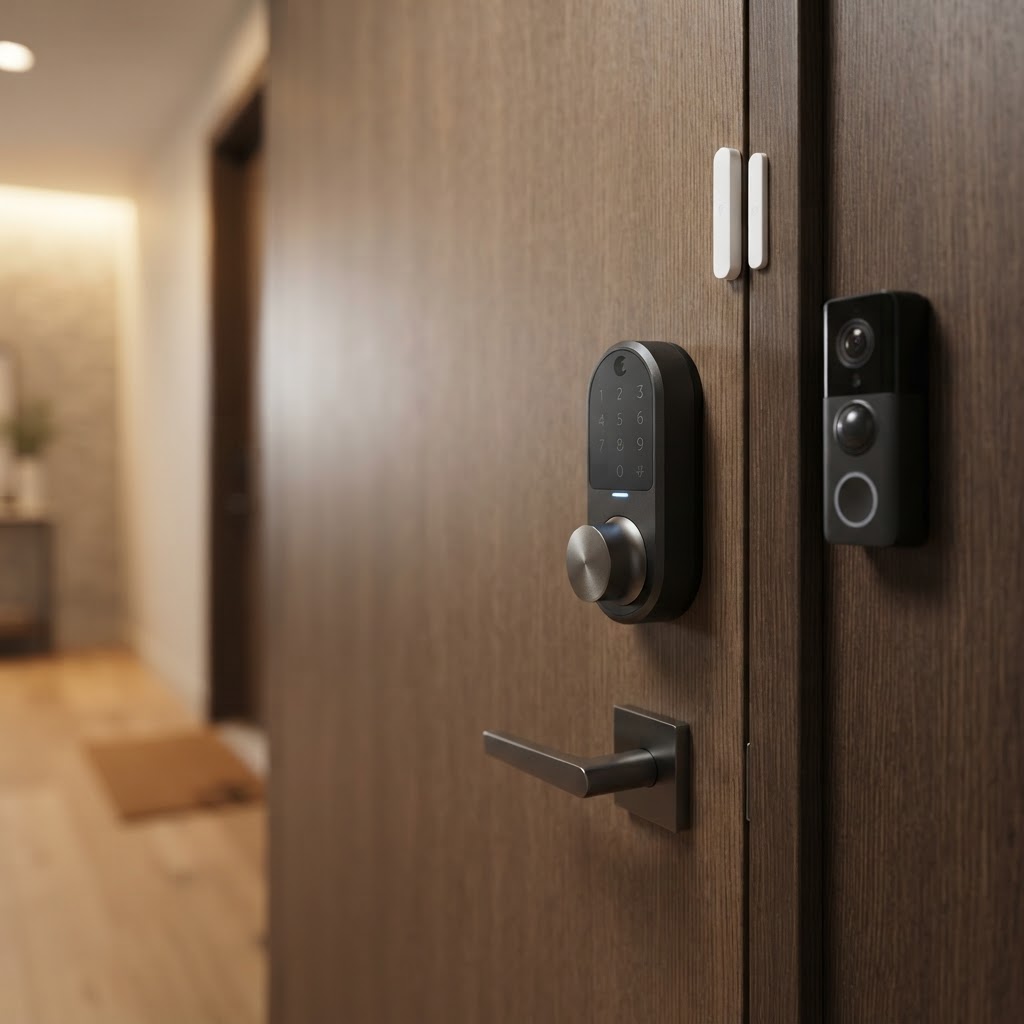
Cryptronics smart locks, video doorbells, and door/window sensors are all designed with renters in mind — no permanent installation required, no landlord permissions needed, and fully portable when your lease ends.
4. The Airbnb Host Problem: Paying Twice
For short-term rental hosts, subscription security creates an additional layer of cost and complexity. Managing a subscription across multiple properties — or across a property you don't live in full-time — means paying monitoring fees whether guests are present or not.
Many hosts also run into problems with subscription systems that flag guest activity as intrusions, require app access that's awkward to share, or lock hosts into hardware that isn't guest-friendly.
What Airbnb hosts actually need:
- Smart locks with temporary access codes for each guest
- Indoor/outdoor cameras to monitor entry points remotely
- Water leak sensors to catch plumbing issues between stays
- Smoke detectors that alert the host directly — no third party required
- Smart power strips to manage energy use between bookings
All of these work better — and cost less over time — when there's no subscription attached. Cryptronics products are built to handle exactly this use case, with no recurring fees eating into your rental income.
5. What You Should Actually Look for in a Security System
Now that the hidden costs are on the table, here's a practical checklist for evaluating any security product before you buy.
Ask these questions:
- Is there a monthly fee? What happens to the device if I stop paying?
- Do I own the hardware outright?
- Can I install it without drilling or hiring a technician?
- What's the warranty, and what does it cover?
- Can I take it with me if I move?
- Does it work without a hub or proprietary app ecosystem?
Why Cryptronics:
- No monthly fees — ever. Pay once, own it forever.
- No-drill installation on locks, sensors, cameras, and doorbells.
- 2-year warranty on all products — double the industry standard.
- 30-day returns with no restocking fees.
- Designed specifically for renters, homeowners, and Airbnb hosts in the LA area.
Conclusion: Smart Security Shouldn't Come With a Subscription
The security industry has done a good job convincing consumers that monthly fees are just part of the deal. They're not. The technology to monitor your own home — affordably, effectively, and without a contract — has never been more accessible.
Whether you're a renter in Silver Lake, a homeowner in the Valley, or an Airbnb host managing a property in Santa Monica, the real cost of your security system is the total you'll pay over time — not just the monthly number on an ad.
Invest in hardware you own. Skip the subscription. Keep the savings.
Explore Cryptronics smart security products built for Los Angeles living — no fees, no drills, no fine print.