The Hidden Costs of Subscription Security Systems
Subscription security systems promise peace of mind but quietly drain your wallet. Learn what you're really paying for — and smarter alternatives.

David Chen
Tech Reviewer & Airbnb Host
David reviews smart home tech and manages short-term rentals. He knows exactly what hosts need to keep guests safe without intrusive setups.
The Hidden Costs of Subscription-Based Security Systems
When you first sign up for a subscription-based home security system, the upfront price can seem reasonable. Maybe even a deal. But after a few months of auto-renewing charges, professional installation fees, and contract penalties, many homeowners and renters realize they've committed to something far more expensive than they bargained for. This post breaks down exactly where those costs hide — and what a smarter, no-subscription approach actually looks like.
The Sticker Price Is Just the Beginning
Most subscription security services advertise a low monthly fee to hook you in. What they don't lead with is the full picture:
- Equipment costs: Many providers charge separately for cameras, sensors, and hubs — sometimes hundreds of dollars upfront before you pay a single monthly bill.
- Professional installation fees: Expect to pay $100–$300+ for a technician to drill into your walls and hardwire devices. For renters, this can also mean losing your security deposit.
- Activation fees: A one-time charge just to turn on your service — often $25–$100 that's buried in the fine print.
- Contract lock-ins: Many services require 12–36 month contracts. Cancel early and you could owe 75–100% of your remaining balance.
- Price escalation clauses: Some contracts allow providers to raise your monthly rate mid-term with minimal notice.
Add it all up over two or three years, and a seemingly affordable $30/month plan can easily cost $1,500–$2,500 or more — before you've even factored in equipment upgrades.
Monitoring Fees: Paying for What You Could Do Yourself
Professional monitoring sounds reassuring. Someone is always watching, ready to dispatch help. But let's be honest about what that service actually delivers:
- Most monitoring centers take 30–60 seconds to respond to an alert — by which time a break-in is already underway.
- False alarms (which are extremely common with motion sensors) can result in police dispatch fees charged to you by some municipalities.
- You're still responsible for verifying alerts yourself in most cases before authorities are called.
Modern smart security devices — including the cameras and sensors Cryptronics carries — send instant push notifications directly to your phone. You see the alert in real time. You decide in seconds whether to call for help. You don't need a middleman charging you $20–$50 a month to do something your smartphone already does.
The Renter Trap: Installation Damage and Lease Violations
For renters — especially those in Los Angeles apartments — subscription-based systems create a specific set of headaches that go beyond the monthly bill:
- Drill-based installation can void your lease or cost you your deposit. Many landlords explicitly prohibit permanent modifications.
- Equipment stays behind: Some providers install proprietary hardware that you contractually cannot take with you when you move.
- Relocation fees: Moving to a new address mid-contract? Some services charge a fee just to transfer your service — and may not even cover your new area.
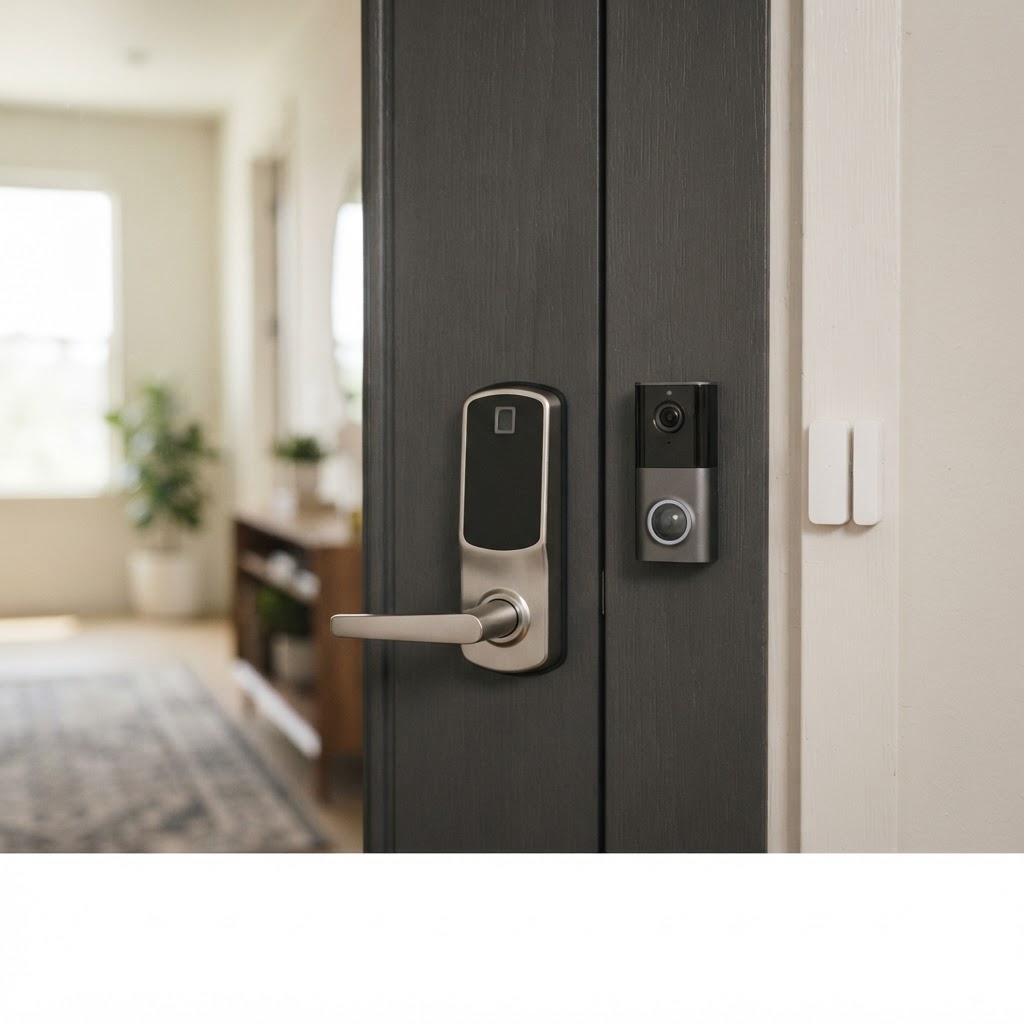
This is exactly why Cryptronics products are designed with no-drill installation from the ground up. Smart locks, video doorbells, door and window sensors, and indoor cameras are all built to install cleanly and remove without leaving a mark. When your lease ends, your security system moves with you.